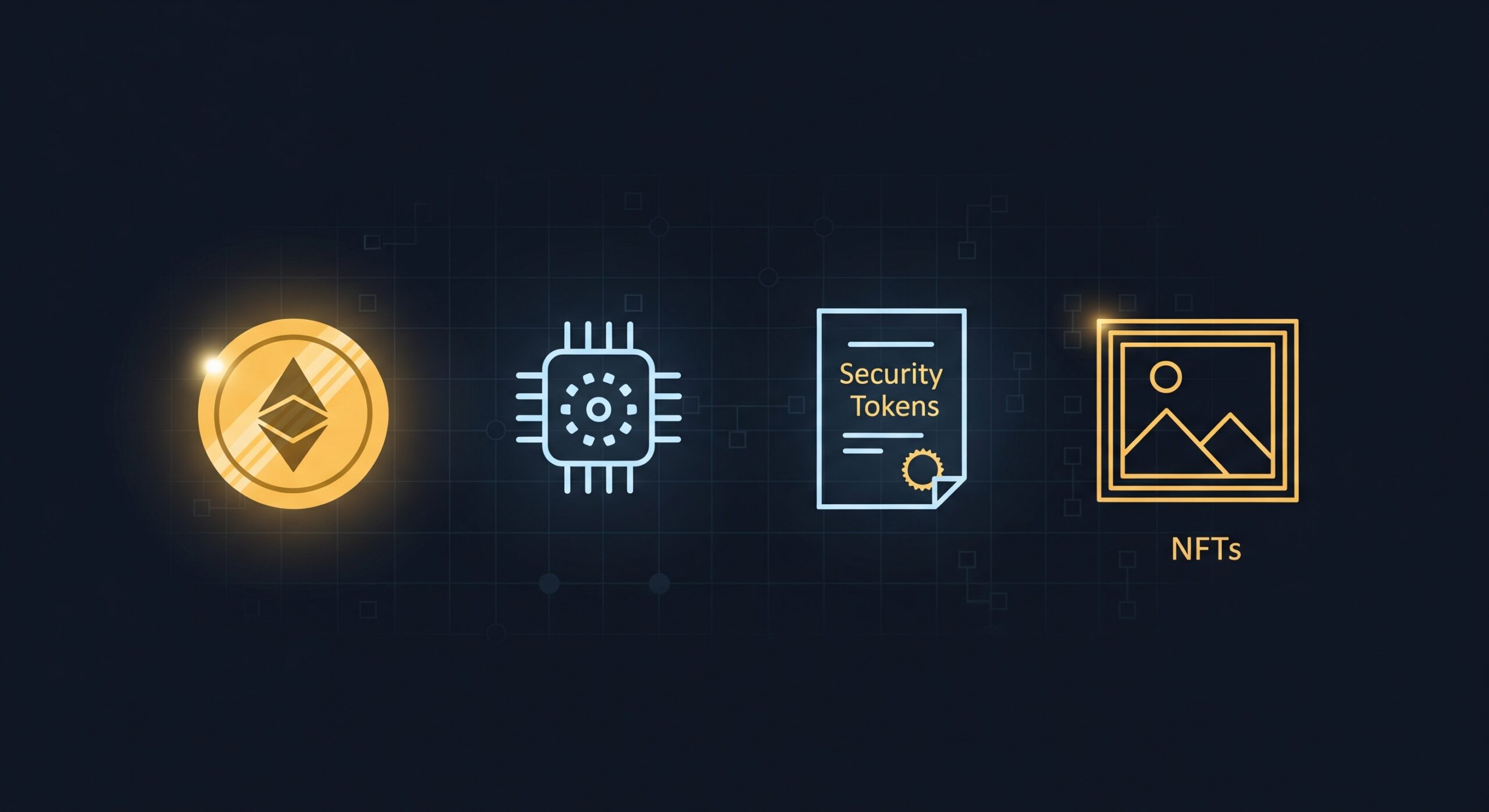
So someone told you to “just buy crypto assets; you’ll be fine,” and you nodded along as you got it. The same thing happened to me years back. Turns out I had no clue what I was actually buying — I thought Bitcoin and every random coin my cousin kept pushing were basically the same thing in different packaging. One of those “coins” was a utility token with zero real use, and I found that out the expensive way.
That’s exactly why I’m writing this. Crypto assets aren’t one product wearing different outfits. Each type behaves differently, carries its own risk, and does a completely different job in your portfolio. Get the categories straight, and suddenly the whole “should I invest, how much, in what” question gets a lot less scary.
Why Everyone Suddenly Wants In On Crypto Assets
You’ve probably seen it happening around you — a coworker won’t stop talking about DCA-ing into Bitcoin, a friend minted their first NFT, somebody’s uncle keeps calling it “digital gold” at every family dinner. None of this is random. A few real reasons are pushing people toward crypto assets and away from just parking cash in a savings account:
⚡ Featured Web3 Resource
Verify smart contracts, track on-chain assets, and audit token security instantly using our recommended platform.
Access Verified Web3 Tool →- Banks barely pay you anything, and inflation quietly nibbles away whatever’s left.
- Holding your own keys means no bank, no middleman, can freeze what’s yours overnight.
- The early success stories are loud and hard to ignore — people who bought Bitcoin or Ethereum for pocket change and never looked back.
- You don’t need a broker or a suit across a desk anymore. An app and a phone are basically all it takes now.
Curious whether jumping in even makes sense for where you’re at right now? I already walked through that here: Should I invest in crypto?
Why I Think You Should Own At Least Some
I won’t sit here and tell you to go all-in — nobody responsible would say that. But sitting on zero crypto assets right now feels a bit like refusing to touch tech stocks back in 2005. You’re not signing up to chase every hype coin. Even a small, deliberate slice of your money in this space gives you:
- Some protection against a currency that keeps losing value quietly.
- A front-row seat to a technology already changing how payments, contracts, and ownership work.
- Room to actually learn — with money you can afford to lose — instead of panic-buying the moment the next bull run kicks off.
The Mistake That Taught Me This Whole Lesson
I put real money into a “utility token” once because the whitepaper sounded smart and the Telegram group was loud and confident. Never checked what the thing actually did. Turns out — nothing. No working product, no real use, just hype and a slick website. Down 70% in four months.
What actually fixed the way I invest wasn’t luck. It was forcing me to sort every crypto asset into its category before buying anything, then asking one blunt question — what job does this thing actually do? That habit alone has saved me from a dozen bad decisions since.
Okay, So What Are Crypto Assets Exactly?

A crypto asset is basically any digital item that uses blockchain (or something similar) to prove who owns it and let it move around. That “item” could be money, a slice of ownership in something, a piece of art, even a stake in real estate.
Cryptocurrency is just one member of that family, not the whole family. Every cryptocurrency counts as a crypto asset, but plenty of crypto assets aren’t cryptocurrencies at all — and honestly, that mix-up confuses more beginners than anything else in this space.
Crypto Assets vs Cryptocurrency — Stop Mixing Them Up
| Term | What It Really Means | Example |
|---|---|---|
| Cryptocurrency | Digital money — you pay with it, store value in it, trade it | Bitcoin, Litecoin |
| Crypto Asset | The whole umbrella — anything of value built on blockchain | Cryptocurrency, tokens, NFTs, stablecoins |
Picture it like a toolbox. Cryptocurrency is the hammer. Crypto assets is the entire box. You need to know which tool is actually in your hand before you start swinging it.
The Types of Crypto Assets, One By One
This is the part I wish someone had handed me on day one, so let’s go through it the way I’d explain it over coffee, not the way a textbook would.
Cryptocurrencies — the payment coins
Built to move value around — send it, receive it, hold onto it. Bitcoin is the obvious face of this category. If you’re just starting, my investing in Bitcoin piece is a good next stop, and honestly, understanding blockchain first will make everything else click faster.
Stablecoins — the ones that don’t move much
Pegged to something steady, usually the US dollar, so you’re not watching the value swing wildly every hour. People park money in these between trades or use them to move funds across borders without the roller coaster. Just know they’re only as safe as whatever’s backing them.
Utility tokens — access passes, basically
These get you into a specific product or platform, kind of like an arcade token that only works in one machine and nowhere else. This is exactly the bucket that burned me, so check what the thing actually does before you buy a single dollar’s worth.
Security tokens — ownership in disguise
These represent a real stake — shares, bonds, a claim on future profit — and regulators treat them a lot like traditional securities. If a token’s whole pitch is “you’ll profit from what we build,” expect it to get classified as a security sooner or later, SEC included.
Governance tokens — your vote in the room
Hold one of these, and you get a say in how a protocol actually gets run, almost like shareholder voting but on-chain. If you care where a project heads next, this is the category that actually gives you a voice.
NFTs — the one-of-ones
Unique digital items — art, collectibles, in-game gear, sometimes even certificates for real-world stuff. Unlike a coin, no two NFTs are interchangeable, and that’s the whole point.
Real-World Asset (RWA) tokens — bridging two worlds
Probably the fastest-growing lane right now. RWA tokens represent something physical — real estate, gold, invoices, even fine art — recorded on-chain. It’s traditional finance and crypto shaking hands, basically.
Platform and smart contract tokens — the engine room
These power the networks developers build on, run automated agreements, and let new tokens launch in the first place. Ethereum is the obvious example here. Want to know what’s actually happening under the hood? Check out smart contracts on blockchain.
How People Actually Get Exposure To Crypto Assets
Buying a coin directly isn’t the only door in. Depending on how hands-on you want to be, you’ve got a few paths:
- A cryptocurrency wallet or digital asset exchange — you buy and hold the actual asset yourself.
- A crypto index fund — spreads your money across several crypto assets at once instead of betting on just one.
- Crypto IRAs — let you hold crypto assets inside a retirement account with the usual tax advantages.
- Traditional brokers dipping into crypto — Fidelity crypto access and a Fidelity crypto wallet are a good example of a name you already trust letting you buy crypto assets through the same account as your regular investments.
- Crypto mutual funds and cryptocurrency mutual funds — a more traditional, hands-off wrapper for people who’d rather not manage a wallet themselves.
None of these are automatically “better” — they’re just different levels of control versus convenience. I lean toward self-custody for anything I plan to hold long-term, and I only use a crypto investment company or fund structure for smaller, more experimental positions.
Crypto Assets By Market Cap — Where I Actually Check
Before buying anything, I check where it sits by market cap. That number tells you how much real capital and trust the market has actually put behind it, not just how loud its community is on social media. My market cap guide breaks this down properly, and I always pair it with the crypto fear and greed index before making any move — price alone never tells the whole story.
What I Personally Look For In “The Best” Crypto Assets
I don’t just grab whatever’s on a “best of” list. My filter’s pretty blunt:
- Does it solve a real problem right now, not “eventually”?
- Is there actual liquidity? (If that term’s new to you, my liquidity in cryptocurrency piece explains it simply.)
- How does it hold up in a downturn? Some crypto assets survive a bear market intact; most don’t — my bear and bull market breakdown shows you how to tell the difference before you’re stuck holding the bag.
Are Your Crypto Assets Actually Protected?
This is the question that keeps people up at night. Fair enough — it should.
Are crypto assets protected by the FSCS?
No. The Financial Services Compensation Scheme covers traditional bank deposits, not what’s sitting in your crypto wallet. If an exchange goes under, you’re generally not covered the way you’d be with a bank.
Are crypto assets protected by the FCA?
The FCA does regulate certain crypto businesses operating in the UK and enforces anti-money-laundering rules, but that’s oversight of the business, not insurance on your holdings.
What about the SEC?
The U.S. Securities and Exchange Commission mostly cares about whether a given crypto asset counts as a security under existing law, which decides what disclosure rules apply to it. Their official breakdown is worth a look: SEC’s crypto assets page.
And Markets in Crypto-Assets Regulation, or MiCA, is the EU’s attempt at one consistent rulebook—licensing, disclosure, and consumer protection — across every member state. It’s the most complete crypto regulation framework built so far, for what that’s worth.
Bottom line? Regulation is catching up, but it’s nowhere near a safety net yet. Treat every platform like you’re trusting it with a favor, not a guarantee.
What Happens To Your Crypto Assets If An Exchange Like Coinbase Goes Down?
If an exchange freezes withdrawals or shuts its doors, what happens to your money depends entirely on their terms of service and whatever bankruptcy process follows — not a government promise sitting behind it. This is exactly why I push people toward self-custody for anything they’re not actively trading. Start with what is a crypto wallet, then compare real options in my 2026 best crypto wallets and top 5 hardware wallets guides. Managing crypto assets with a team or family? A multisig wallet adds a real layer of protection there.
If You’ve Lost Access — Crypto Assets Recovery
Lost your seed phrase or sent funds to the wrong address? There’s no universal “undo” button here — that’s the price of true ownership, and it stings the first time it happens to you (or someone you know). Legitimate recovery usually means going through the wallet provider’s official support, checking blockchain explorers for the transaction’s status, and, if fraud’s involved, reporting it to your local financial regulator. Be very wary of “recovery experts” who slide into your DMs — most of them are just scamming people who already got burned once.
Crypto Asset Types At A Glance
| Type | Purpose | Example | Risk Level |
|---|---|---|---|
| Cryptocurrency | Payments & store of value | Bitcoin | Medium |
| Stablecoin | Price stability | USDT, USDC | Low–Medium |
| Utility Token | Platform access | In-app tokens | High |
| Security Token | Ownership/profit share | Tokenized equity | Medium–High |
| Governance Token | Voting rights | DAO tokens | High |
| NFT | Unique ownership | Digital art | High |
| RWA Token | Real asset backing | Tokenized real estate | Medium |
The Risk Side Nobody Really Warns You About
I’ll be straight with you — I’ve lost money here, and so has almost everyone I know who’s stuck around long enough. Prices swing hard, projects fail, and hype cycles punish whoever shows up late. Before you put a single dollar in, get comfortable with dollar-cost averaging as a way to smooth out the volatility instead of trying to nail the “perfect” entry — something I wish I’d used from day one instead of dumping in one lump sum and hoping.
And when tax season rolls around, and you’ve got multiple crypto asset types scattered across accounts, tools from my best crypto tax software and free crypto tax software roundups will save you real hours. It’s worth skimming the 2026 crypto tax rules too, before you file anything.
Quick Answers (FAQ)
What are crypto assets in simple terms?
Any digital item of value built on blockchain — coins, tokens, NFTs, stablecoins, all of it.
What’s the actual difference between crypto assets and cryptocurrency?
Cryptocurrency is one type of crypto asset. “Crypto assets” is the bigger umbrella covering everything blockchain-based.
Can you give me some real crypto asset examples?
Bitcoin, Ethereum, a stablecoin like USDT, a governance token like UNI, and NFT collections all count.
Are crypto assets a good investment?
It can be for the right slice of a diversified portfolio — never your whole savings account. My should I invest in crypto guide walks through this properly.
Can I actually lose my crypto assets for good?
Yes — lost keys, scams, exchange failures, all of it happens. Self-custody and backups cut that risk down a lot.
Where do I check crypto assets by market cap?
Independent trackers like CoinMarketCap update this in real time, and my own market cap piece explains how to actually read it.
Is a crypto IRA worth looking into?
If you’re already thinking long-term retirement savings, a crypto IRA lets you hold crypto assets with the same tax treatment as a regular IRA — worth researching if that fits your goals.
One Last Thing
Crypto assets were never really one bet — they’re a whole toolbox, and the people who actually do well here are the ones who figure out what each tool is for before they pick it up. Start small, stay curious, and let that guide you instead of the noise. That’s the difference between the version of me who lost 70% on a worthless token and the version of me writing this for you right now.

Ammar Malik is an independent digital asset researcher and the founder of AmmarMagazine. He specializes in analyzing on-chain security and evaluating technical tools. Through clear, objective crypto resources, Ammar Malik delivers accessible Web3 education to help everyday users navigate the market safely.