You’ve bought your first crypto. Maybe it’s Bitcoin, maybe it’s Ethereum. You’re excited. And then someone asks you, “Where are you storing it?”
You pause. That pause is exactly why this article exists.
The best crypto wallets in 2026 aren’t just apps or USB sticks — they’re the difference between keeping your assets safe and losing everything overnight because of a hack, a rug pull, or a forgotten seed phrase. I’ve been in this industry long enough to watch both happen. Let me save you the pain.
⚡ Featured Web3 Resource
Verify smart contracts, track on-chain assets, and audit token security instantly using our recommended platform.
Access Verified Web3 Tool →Why People Are Shifting to Personal Crypto Wallets
When I first got into crypto, I did what most beginners do — I left everything on the exchange. It felt safe. The platform was big; it had a nice UI, and customer support was reachable. What could go wrong?
A lot. And it did.
Exchanges get hacked. Platforms freeze withdrawals. Regulations shift overnight, and your funds get locked without warning. The people who survived those collapses were the ones who had already moved their assets into their own wallets — wallets where they held the keys.
That shift from “keeping crypto on an exchange” to “owning your private keys” is the most important mental upgrade you can make as an investor. And it’s why the demand for the best secure crypto wallets has exploded heading into 2026.
Why Everyone Needs a Crypto Wallet — Not Just the Big Investors
Here’s the thing most people get wrong: they think wallets are only for serious traders or people with six-figure portfolios. Wrong.
If you’ve got $50 in crypto, you need a wallet. Here’s why.
When your crypto sits on an exchange, you don’t actually own it. The exchange does. You own an IOU. The moment that exchange faces liquidity issues — like what we witnessed with several platforms in the past few cycles — your “balance” is just a number on a screen.
The best non-custodial wallet gives you actual ownership. You hold the private keys. Nobody can freeze your assets, no government can issue a request to block your wallet, and no exchange collapse takes your money down with it.
That’s not just a feature. That’s financial freedom.
My Personal Case Study: The Wallet That Saved Me
I remember moving a significant portion of my holdings off an exchange into a cold hardware wallet. It felt tedious at the time — generating a seed phrase, writing it down, double-checking it, and triple-checking it. My colleague thought I was being dramatic.
Three months later, that exchange suspended withdrawals.
I slept fine that night. He didn’t.
That experience hardened my rule: anything I’m not actively trading goes into cold storage. Hot wallets for daily movement, cold wallets for long-term holding. It’s not a complicated strategy. It’s just discipline.
Hot Wallets vs. Cold Wallets — What You Actually Need to Know
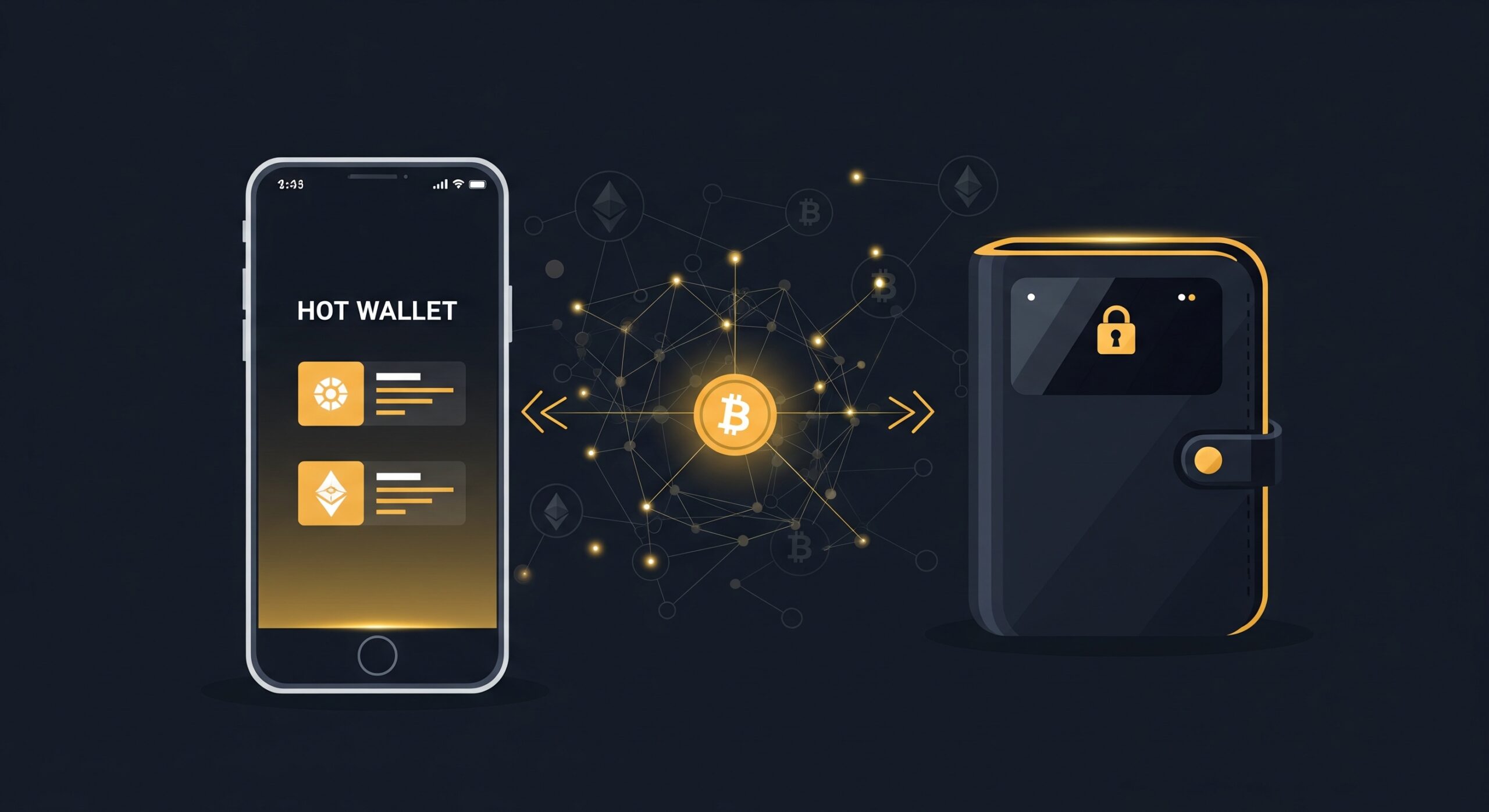
Hot wallets are connected to the internet. They’re fast, convenient, and perfect for everyday transactions. Think of them like your regular checking account — accessible, easy to use, but not where you keep your life savings.
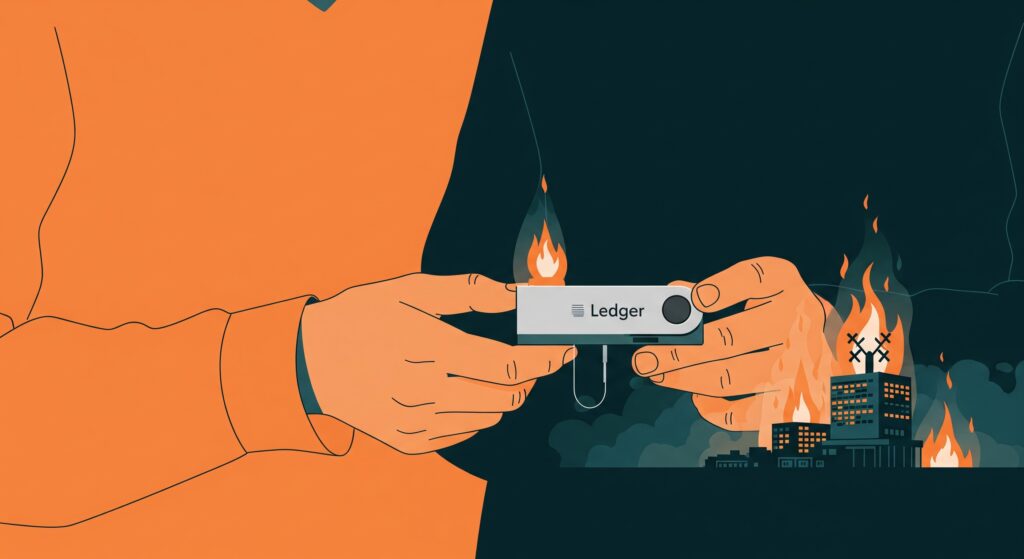
Cold wallets are offline. Physical devices or paper-based storage that hackers simply cannot reach because there’s no internet connection to exploit. This is your vault.
Neither one is better in absolute terms. The best approach is to use both and learn which one to use for what.
Best Hot Wallets in 2026
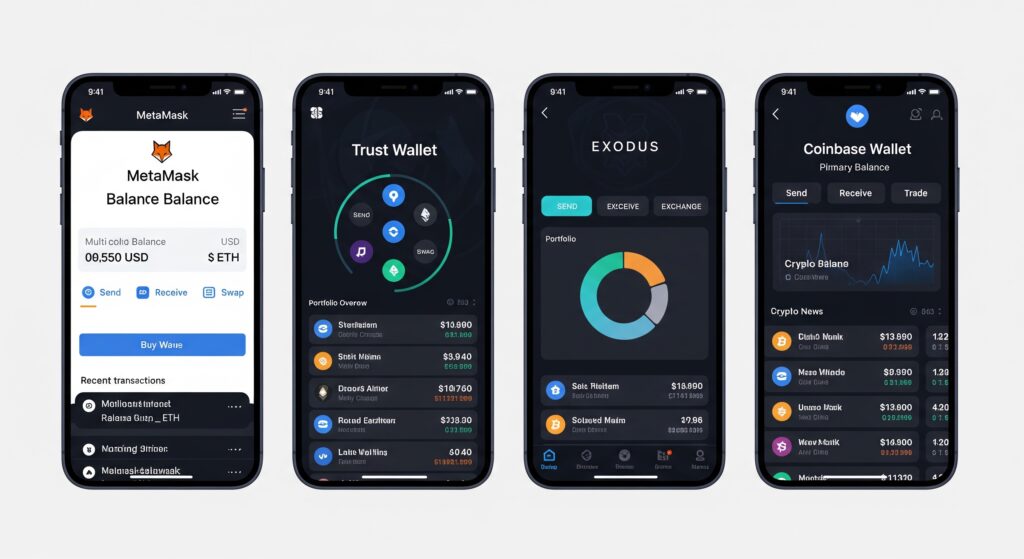
MetaMask — The DeFi Standard
If you’ve spent any time in DeFi, you know MetaMask. It’s the most widely used, best DeFi wallet, and best online crypto wallet in the space. Browser extension, mobile app, multi-chain support — it connects to virtually every decentralized application out there.
What I like about it: it’s non-custodial, meaning you hold your own keys. What you have to be careful about: phishing sites. Always verify the URL before connecting your MetaMask to any platform.
Best for: DeFi users, NFT buyers, Ethereum ecosystem participants
Trust Wallet — The Mobile-First Pick
Trust Wallet is Binance’s official best mobile crypto wallet, but don’t let the Binance name mislead you — it’s non-custodial. You hold your keys. It supports hundreds of blockchains, has a built-in DApp browser, and is genuinely one of the cleanest apps to navigate.
For anyone asking about the best crypto wallets for beginners, Trust Wallet is usually my first recommendation. Clean interface, no unnecessary complexity, and a staking feature built in.
Best for: Mobile users, beginners, multi-chain holders
Exodus — Beautiful, Beginner-Friendly, and Surprisingly Powerful
Exodus is one of those wallets that makes crypto feel approachable. Desktop and mobile. Built-in exchange. Portfolio tracker. And no KYC — it’s firmly in the best no-KYC crypto wallets category.
The downside? It’s not open-source, which makes some in the security community uneasy. For beginners, though, the trade-off is usually worth it.
Best for: Beginners, multi-asset holders, desktop users
Coinbase Wallet — Not to Be Confused With Coinbase
This one trips people up. Coinbase Wallet is a separate, self-custody product from Coinbase, the exchange. You own your keys. It’s the best non-custodial wallet that happens to have the Coinbase brand — and it integrates cleanly with dApps, DeFi protocols, and NFT platforms.
If you’re in the best crypto wallets in the USA category and already using Coinbase’s ecosystem, this is a natural extension.
Best for: US users, Coinbase ecosystem participants, DeFi starters
Best Cold Wallets in 2026
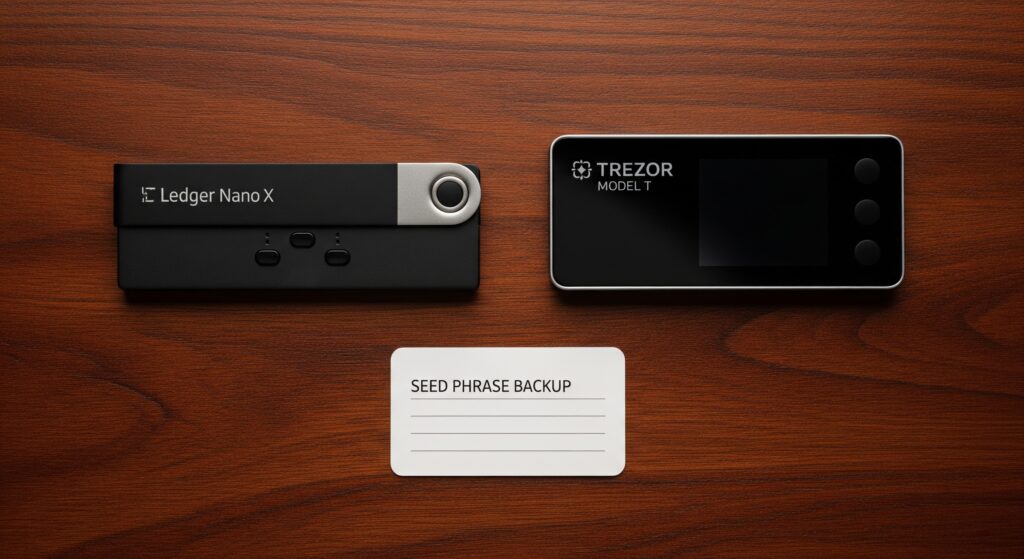
Ledger Nano X — The Industry Benchmark
If you ask me what I personally use for long-term holdings, it’s a ledger. The Nano X supports over 5,500 coins, connects via Bluetooth to mobile, and integrates with Ledger Live for a clean management experience.
It’s not the cheapest option. But when you’re storing serious value, the price of a hardware wallet is the cheapest insurance you’ll ever buy. This is the gold standard for the best secure crypto wallet choices.
Best for: Long-term investors, large holders, multi-asset portfolios
Trezor Model T — Open Source and Trusted
Trezor is the other pillar of cold storage. What sets it apart is that it’s fully open-source — every line of code is publicly verifiable. For the security-conscious, that matters a lot.
The Model T has a touchscreen, supports a wide range of assets, and pairs with dozens of third-party apps, including Exodus and MetaMask. It’s one of the most trusted names in crypto wallet software when it comes to hardware.
Best for: Security-first users, open-source advocates, long-term holders
Coldcard — For the Bitcoin Maximalists
Coldcard is not for beginners. But if you’re a Bitcoin-only holder who wants maximum security, this is the wallet serious Bitcoiners use. Air-gapped signing, passphrase support, multi-signature setups — it goes deep into security features most wallets don’t touch.
No altcoin support. That’s intentional. Coldcard does Bitcoin, and it does it better than almost anything else.
Best for: Advanced Bitcoin holders, security professionals
Wallet Comparison Table: Hot vs. Cold at a Glance
| Wallet | Type | Custody | Best For | KYC Required | Fee Level |
|---|---|---|---|---|---|
| MetaMask | Hot | Non-custodial | DeFi / ETH | No | Network fees only |
| Trust Wallet | Hot | Non-custodial | Mobile / Beginners | No | Network fees only |
| Exodus | Hot | Non-custodial | Multi-asset / Desktop | No | Built-in spread |
| Coinbase Wallet | Hot | Non-custodial | US Users / DeFi | No | Network fees only |
| Ledger Nano X | Cold | Non-custodial | Long-term Holding | No | Hardware cost |
| Trezor Model T | Cold | Non-custodial | Security-first Users | No | Hardware cost |
| Coldcard | Cold | Non-custodial | Bitcoin Maximalists | No | Hardware cost |
Crypto Wallet With Lowest Fees — What to Know
Every wallet charges differently. Hot wallets typically don’t charge their own fees — you pay the blockchain’s network fee (gas fee on Ethereum, for example). The wallet software itself is free.
The catch is with built-in swaps and exchanges inside wallets like Exodus or Trust Wallet — those come with a spread markup. If you’re swapping frequently, you’ll feel it.
For the crypto wallet with the lowest fees, the answer is usually to use a hot wallet for direct transfers, avoid in-app swaps, and connect to decentralized exchanges yourself when you need to trade. That way, you pay only the network fee.
Cold wallets are a one-time hardware purchase — no ongoing fees unless you’re using Ledger Live’s premium features.
Decentralized Crypto Wallets vs. Exchange Wallets — The Final Word
I’ll be blunt: a cryptocurrency exchange wallet is not a real wallet for long-term use.
Exchange wallets are convenient for trading. That’s it. The moment you stop actively trading a position, move it. Not tomorrow — now.
Blockchain technology was built on the principle that you should be able to hold your own assets without depending on a third party. When you leave assets on an exchange, you’re surrendering that principle entirely.
Investing in Bitcoin properly means not just buying it — it means securing it. And that security starts with the right wallet.
Seed Phrases — The One Thing That Actually Protects You
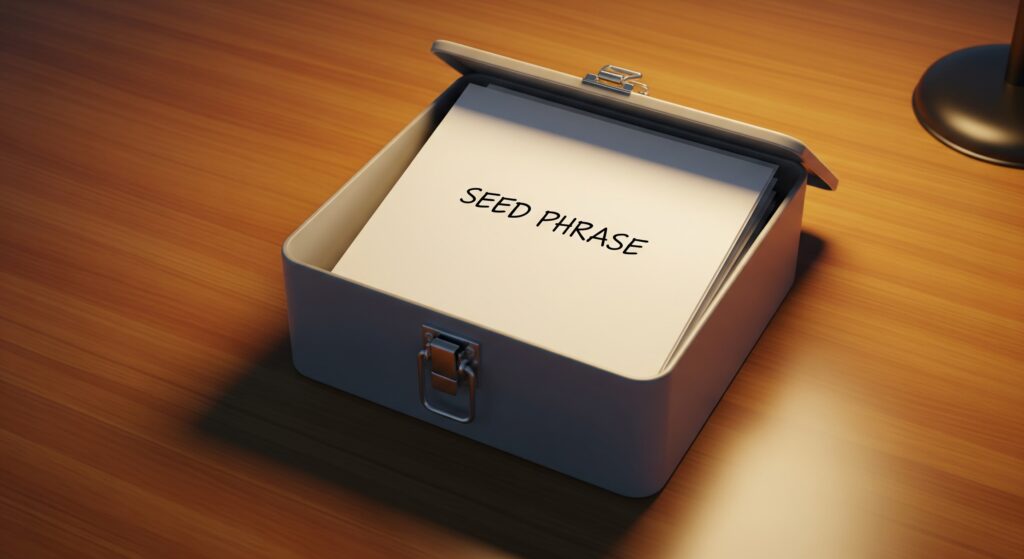
Your seed phrase is more important than the wallet itself. It’s a 12 to 24-word recovery phrase that can restore your entire wallet on any compatible device.
Write it on paper. Store that paper somewhere fireproof. Never photograph it. Never type it into any website. If someone calls themselves “wallet support” and asks for it, hang up. That’s always a scam.
I’ve seen people lose everything, not because of a hack, but because they lost their seed phrase and had no backup. Treat it like a house deed.
Frequently Asked Questions
What is the best crypto wallet for beginners in 2026?
Trust Wallet and Exodus are the two I recommend most. Clean interfaces, non-custodial, no KYC, and broad coin support. Start with one of those before exploring more advanced options.
Is a hot wallet safe enough?
For small amounts and active trading, yes. For long-term holdings above a few hundred dollars, pair it with cold storage. Hot wallets are always connected to the internet — that’s a surface for risk.
What’s the difference between a custodial and non-custodial wallet?
“Custodial” means someone else holds your keys (like an exchange). “Non-custodial” means you hold them. For true ownership of your crypto, always go non-custodial.
Can I use multiple wallets?
Absolutely — and you should. Most serious investors use a hot wallet for daily activity and a cold wallet for storing larger positions. It’s the same principle as having a checking and a savings account.
Do crypto wallets store the actual coins?
No — and this surprises most beginners. Your coins stay on the blockchain. The wallet stores your private keys, which give you access to those coins. Lose the keys, lose the access.
Which is better — Ledger or Trezor?
Both are excellent. Ledger has broader coin support and Bluetooth. Trezor is fully open-source. If security transparency is your priority, Trezor. If you want wider compatibility and a smoother app experience, choose Ledger.
Before You Move Any Crypto — One Practical Step
Before transferring anything to a new wallet, send a small test amount first. Five dollars. Wait for it to confirm. Then send the rest.
I’ve watched people accidentally send to the wrong address or the wrong network and lose everything in one transaction. The test transfer habit costs you nothing and protects you from an irreversible mistake.
Understanding market cap and price movements matters — but if your wallet isn’t secured properly, none of that analysis saves you. Security is the foundation.
The Right Wallet Strategy for 2026
The bear cycles test your patience. The bull markets test your discipline. But wallet security tests your commitment to actually keeping what you earn.
Hot wallet for what you’re using. Cold wallet for what you’re keeping. Seed phrase backed up in a safe place. That’s it. That three-part framework has protected serious investors through every market cycle I’ve seen.
The market can be volatile. Your storage doesn’t have to be. The best wallet isn’t the one with the most features — it’s the one you actually secure properly. One disciplined step today protects everything you build tomorrow.

Ammar Malik is an independent digital asset researcher and the founder of AmmarMagazine. He specializes in analyzing on-chain security and evaluating technical tools. Through clear, objective crypto resources, Ammar Malik delivers accessible Web3 education to help everyday users navigate the market safely.