Okay, so let me tell you about my first crypto buy. Bad idea. A guy on a forum said some coin was “about to explode.” I had two coffees in me, it was late, and I just… bought it. No research. Nothing. It did explode. Just not in the direction I was hoping for. Lost about 40% of it before I even figured out how to check the price properly.
I’m telling you this because I don’t want you making that same dumb move. Crypto isn’t the problem here. The problem is going in with no plan, which is exactly what I did and exactly what most people do their first time. Once you actually have a plan, the whole thing stops feeling like a casino and starts feeling like, well, investing.
Why Are So Many People Getting Into Crypto Right Now
You’ve probably felt this yourself. Your friend brings up Bitcoin at dinner. Your cousin won’t shut up about some coin he bought “at the bottom.” Meanwhile, your savings account is sitting there making basically nothing while everything gets more expensive around you. It’s annoying, and it’s exactly why people start looking elsewhere.
⚡ Featured Web3 Resource
Verify smart contracts, track on-chain assets, and audit token security instantly using our recommended platform.
Access Verified Web3 Tool →Here’s what’s actually pulling people in, from what I’ve seen:
- Your bank savings account pays you almost nothing. 1-2% doesn’t cut it anymore.
- Crypto markets never close. You can buy at 3 am if you want to; nobody’s stopping you.
- You actually own the thing. Nobody can freeze a wallet that’s sitting on your own device.
- People really did turn small amounts into serious money. Rare, sure, but real, and that possibility is enough to make people curious.
Should You Even Have Crypto? Here’s My Honest Take
I’m not going to sit here and tell you to dump your rent money into Bitcoin. That’s a terrible idea, and anyone who tells you otherwise is selling something. But a small chunk of your money in crypto? That actually makes sense for most people.
Why? Because it moves differently than your stocks and your regular savings. Sometimes it goes up when everything else is flat. Sometimes it’s the opposite. You’re not putting all your eggs in one basket, which, yeah, your grandma probably told you the same thing about, money in general.
Still not sure if this is even for you? I wrote a whole piece on whether should I invest in crypto that walks through it without any of the hype.
What Actually Happened When I Started Doing This For Real
So back to my story. That forum coin wasn’t my only screwup, not even close.
Here’s what didn’t work for me: buying coins after they’d already jumped 200%. I’d see the green candles on the chart, panic that I was missing out, and buy right at the top. Every time. Then it would cool off, and I’d be sitting on a loss, annoyed at myself for the hundredth time. I also kept everything on one exchange because it was easier, until that exchange froze withdrawals for three days during a crash. I genuinely didn’t sleep that weekend.
What worked, eventually, was boring stuff. I set up a fixed amount going into Bitcoin and Ethereum every two weeks, no matter what the price was that day. I moved most of it off the exchange into a wallet I actually control. And honestly, I stopped checking prices every hour, which sounds small, but it made me a way better investor. Less panic, fewer bad decisions.
If you take one thing from my mistakes, take this: boring beats exciting almost every time when it comes to money.
The Different Ways To Invest in Crypto
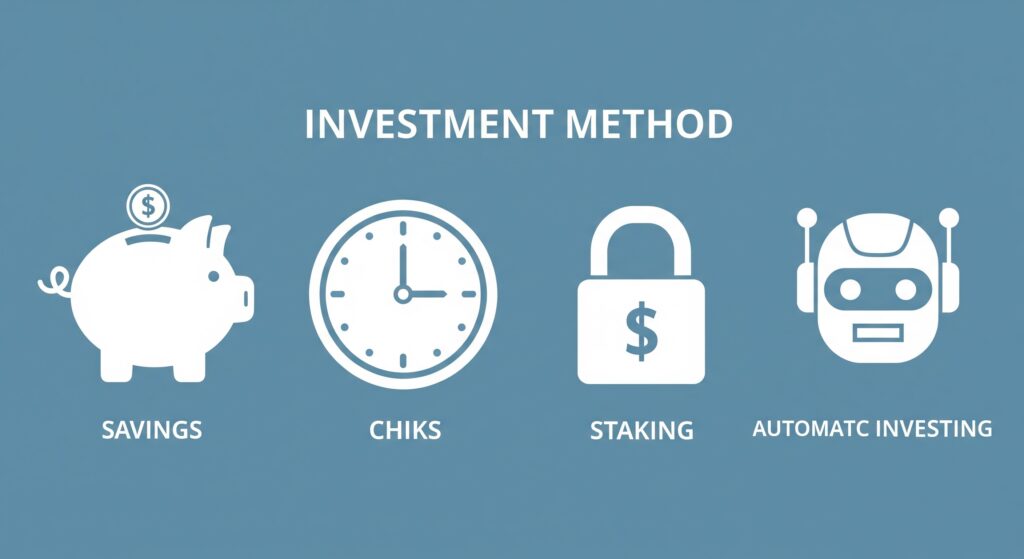
Alright, let’s get into it. There’s not just one way to do this. A few different paths, and honestly, the right one depends on you — how much time you’ve got, how much risk you can stomach, that kind of thing.
1. Just Buy It and Hold On
Pretty much what it sounds like. You buy Bitcoin or Ethereum, you sit on it, and you ignore the daily ups and downs. Not exciting. Not a great story to tell at a party. But it’s what most long-term investors actually do.
2. Dollar-Cost Averaging — this one’s my favorite
Instead of dumping everything in at once, you put in a fixed amount on a schedule. Weekly, every two weeks, monthly, whatever works. This smooths out the crazy price swings crypto is known for. I broke this whole method down with real numbers in my dollar-cost averaging guide. Honestly, if you’re starting, this is probably the safest way, and ahead there are many ways to invest in crypto.
3. Active Trading
Buying and selling more often, trying to catch price swings. Can work. Also, how most beginners lose money fast, including myself at times. If you want to try it anyway, at least learn to read a chart first — my breakdown of TradingView indicators is a decent place to start.
4. Staking
Some coins let you lock them up to help secure the network, and they pay you for it. Kind of like interest, but for crypto. Just know there’s usually a lock-up period, so don’t stake money you might need next week.
5. Crypto ETFs
Not into managing a wallet? ETFs let you get crypto exposure through a regular brokerage account, same as buying a stock. Less control, way less hassle. Good option if the technical side scares you off.
6. Letting a Bot Trade for You
There are automated tools that trade based on rules or algorithms instead of your emotions, which honestly is a good thing because your emotions are not a great trader. Still need some supervision though. I reviewed a few AI trading bots for the 2026 roundup.
7. Earning Crypto Without Buying Any
You don’t always need to spend money to get in. Some platforms give you small crypto rewards for tasks, learning, or spending you were already doing. A low-pressure way to get comfortable before you put real money down.
Okay But How Much Should You Actually Put In Per Month
People ask me this constantly. My honest answer: only what you won’t lose sleep over. That’s it, that’s the rule.
If you want a number, keep your crypto somewhere between 1% and 10% of what you’re investing overall, depending on your age and how much risk you can handle. Just starting out? Even $25 or $50 a month through dollar-cost averaging is enough to build the habit without touching your rent money.
Don’t Skip This Part — Keeping Your Crypto Safe
This is where people actually get burned, and it’s avoidable almost every time. There’s no bank to call when something goes wrong here, so you kind of have to be your own security guard.
- Use a real wallet, not just the exchange app. Leaving everything on an exchange is like keeping your savings in the shop’s cash register overnight. I explain the difference here: What is a crypto wallet?
- If you’re holding a decent amount, look into a hardware wallet. Keeps things offline, away from hackers. I compared a few good ones in 2026’s top hardware wallets.
- Never, ever share your seed phrase. Not with “support,” not with a giveaway bot, not with your best friend.
- Learn what liquidity actually means before you buy something obscure. Some coins are easy to sell; others you’ll be stuck holding. I go through this in liquidity in cryptocurrency.
- Keep track of your taxes from day one, not the night before filing. My guide on 2026 crypto tax rules will save you a headache later.
If you want a broader, unbiased explainer on how this stuff works under the hood, Investopedia’s overview of cryptocurrency is genuinely worth bookmarking.
Investing Doesn’t Have to Feel Like a Chore
A few ways people actually make this fun instead of stressful:
- Get a crypto rewards credit card so your regular spending quietly builds your stack. I compared some solid ones in the 9 best crypto credit cards for 2026.
- Watch the market’s mood, not just the price, using something like the crypto fear and greed index. It’s a good gut check for when everyone’s panicking versus when everyone’s greedy.
- Learn how the cycles actually work through the bear and bull market guide. Once you get this, the charts stop looking so random.
Quick Comparison If You’re Still Deciding
| Method | Risk Level | Time Needed | Best For |
|---|---|---|---|
| Buy and Hold | Low-Medium | Minimal | Long-term, hands-off investors |
| Dollar-Cost Averaging | Low | Minimal | Beginners, steady savers |
| Active Trading | High | High | Experienced, hands-on traders |
| Staking | Medium | Low | Passive income seekers |
| Crypto ETFs | Low-Medium | Minimal | Beginners wanting simplicity |
| AI Trading Bots | Medium-High | Low-Medium | Tech-comfortable investors |
The One Strategy I Wish Someone Told Me Sooner
If you only remember one thing from this whole article, make it this: automate the buying and control the storage yourself. Set up a recurring buy, so you’re not the one deciding when to hit the button (your emotions will always want to buy high and sell low; sorry, that’s just how it goes). Then move those coins off the exchange into a wallet you actually control. This one habit fixed both of my worst mistakes at once, and it’s still exactly what I do today.
Before you put money anywhere, though, it helps to actually understand what’s moving the price. My guides on market cap and Bitcoin price predictions for 2026 will get you there without the guesswork.
Frequently Asked Questions
How do I start investing in cryptocurrency as a complete beginner?
Pick one or two established coins; Bitcoin or Ethereum are the usual starting points. Set up small recurring buys, and once you’re comfortable, move your coins into a wallet you control.
How much money do I need to start investing in crypto?
You can technically start with $10 or $20 on most platforms. What matters way more is showing up consistently, not the amount you start with.
Is it too late to invest in cryptocurrency in 2026?
No. Markets move in cycles, not straight lines up or down. It’s less about timing and more about having a strategy you’ll actually stick with.
What’s the safest cryptocurrency to invest in for beginners?
Bitcoin and Ethereum, generally. They’re the most established and easiest to buy and sell without getting stuck.
Can I lose all my money investing in crypto?
Yes, if you go in too heavy or fall for a scam. This is exactly why the security stuff and position sizing matter as much as picking a coin.
Should I trade crypto or just hold it long-term?
For most people starting out, holding long-term with dollar-cost averaging beats active trading. It takes the emotional decision-making out of it, which is honestly where most people mess up.
When you’re ready to actually buy, how to buy crypto safely walks through the exact steps I still use. And when it’s time to cash out, selling crypto for cash covers how to do that without losing money to bad timing or fees.
Before You Go
This isn’t about finding some magic coin that makes you rich overnight. It’s about showing up consistently, protecting what you build, and giving it time to actually grow. Start small. Stay steady. You’ll thank yourself in a few years, not because you got lucky, but because you actually stuck with it when everyone else gave up.

Ammar Malik is an independent digital asset researcher and the founder of AmmarMagazine. He specializes in analyzing on-chain security and evaluating technical tools. Through clear, objective crypto resources, Ammar Malik delivers accessible Web3 education to help everyday users navigate the market safely.