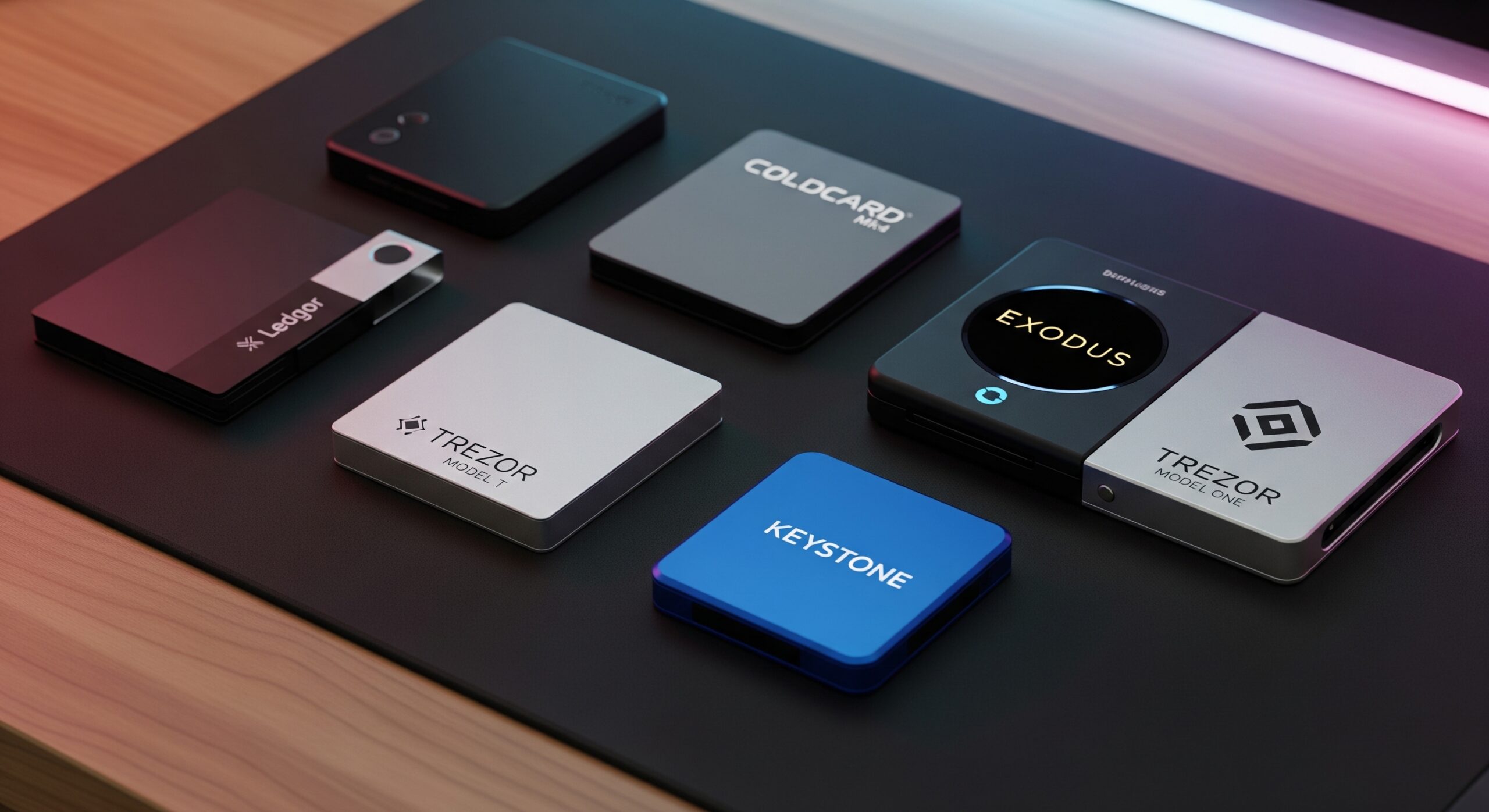
Your crypto isn’t yours until it’s off the exchange. That’s the short version. The long version? Keep reading — because a lot of people learn this the hard way.
Why People Are Finally Taking This Seriously
I get this question almost every week now. “Do I really need a hardware wallet?” And honestly, two years ago, most people brushed it off. “I’ll get one when I have more money.” “The exchange is fine.” “I trust the platform.”
Then, exchanges started freezing withdrawals. People lost funds in hacks they had nothing to do with. A friend of mine — someone who knew his stuff — had his hot wallet drained through a browser extension he’d installed months earlier. He didn’t even know it was malicious. One transaction. Gone in 30 seconds. No undo button.
⚡ Featured Web3 Resource
Verify smart contracts, track on-chain assets, and audit token security instantly using our recommended platform.
Access Verified Web3 Tool →That’s when people stop asking “Do I need this?” and start asking, “Which one do I get?” If you’re already there, good. You’re ahead of most people.
What’s Actually Going On When You Use a Hardware Wallet
Here’s the thing most people don’t know. Your crypto doesn’t sit inside any wallet — not even a hardware one. It lives on the blockchain. What your wallet holds is the private key — the proof that you own those coins, and only you can move them.
A hardware wallet keeps that key completely offline. Even if your laptop has malware, even if someone’s watching your screen, even if your Wi-Fi is compromised — they can’t touch your crypto. Because the key that signs every transaction never touches the internet.
That one concept explains why hardware wallets matter so much. Everything else is just picking which one.
My Own Wake-Up Call
I’ll be honest with you. I left funds on an exchange way longer than I should have. “It’s more convenient,” I told myself. Until that platform froze withdrawals one morning with zero warning. My funds were stuck for weeks. Nothing was stolen. But I had zero control over my own money during that entire time.
That’s the part people don’t think about until it happens. It’s not always a hack. Sometimes it’s a policy change. A government order. A liquidity crisis. And when that happens, it doesn’t matter how careful you were — because someone else is holding your keys.
I moved to cold storage after that. I haven’t looked back once.
This connects directly to something I wrote about in investing in Bitcoin — custody mistakes are consistently the most painful and most preventable losses in crypto. Worth reading if you haven’t.
What Makes a Hardware Wallet Actually Good
Before the list — here’s what separates a solid wallet from a mediocre one.
- Secure element chip — A specialized chip that locks your private key and never releases it. Think of it like a vault inside the device.
- Open-source firmware — If the code is public, independent researchers can check it for backdoors. If it’s closed, you’re trusting the company blindly.
- Air-gap — The most secure wallets never connect to your computer at all. They communicate via QR code only. No cable. No attack surface.
- Seed phrase backup — If your device breaks, your seed phrase (12–24 words) gets your funds back on any replacement device. How a wallet handles this matters.
That’s the checklist. Now the actual five.
The Top 5 Cryptocurrency Hardware Wallets in 2026
1. Ledger Nano X — The One Most People Should Start With
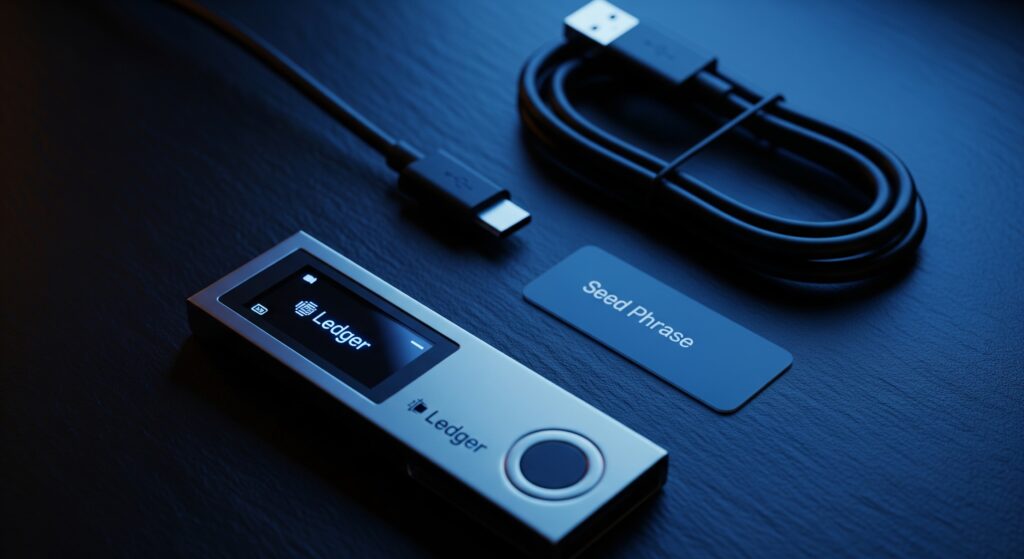
Walk into any conversation about the best cryptocurrency hardware wallet, and the Ledger Nano X comes up first. Not because of marketing — because it genuinely works for the widest range of people.
It uses a CC EAL5+ certified secure element chip. The same class of chip that goes into passports and banking cards. Over 5,500 supported coins. Bluetooth for mobile use. And Ledger Live — the companion app — is one of the most refined pieces of crypto software available. You can track your portfolio, stake, and even buy crypto directly from it.
There’s a real conversation in the community about the 2023 data incident where customer emails and home addresses were exposed. That’s worth knowing. No funds were taken — the hardware security held. But some users got targeted phishing messages afterward. So stay sharp with any emails claiming to be from Ledger.
If you want to understand how your Ledger crypto wallet fits into a bigger security strategy — especially around how to think about the coins inside it — the piece on market cap is a good next read. Because knowing what you’re holding matters just as much as how you’re holding it.
Price: ~$149 | Best for: Most people, multiple coins, daily use
2. Trezor Model T — For People Who Want to See Everything
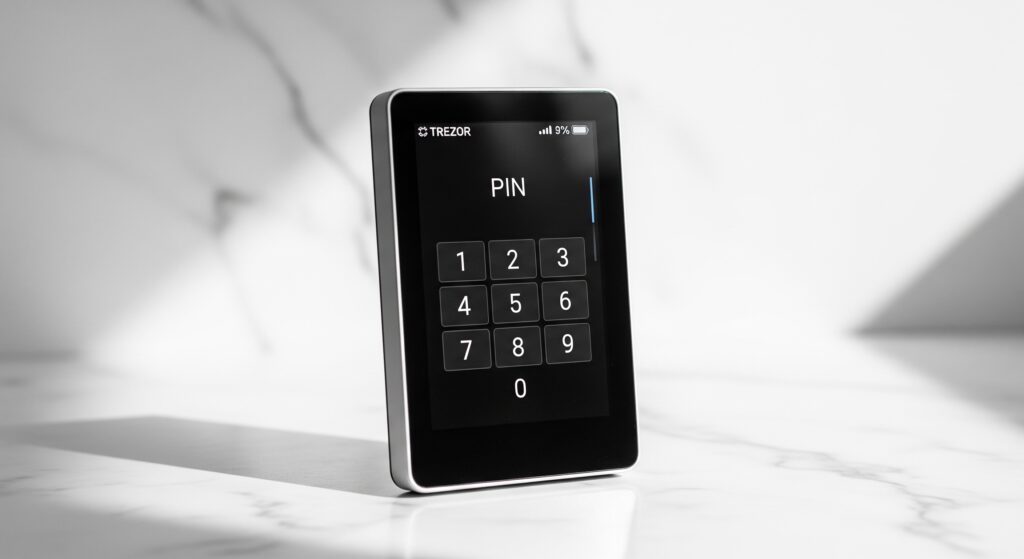
Trezor’s entire philosophy is “Don’t trust us; verify us.” Every line of firmware is on GitHub. Independent security researchers have gone through it. You don’t have to believe Trezor’s security claims — you can read the code yourself.
That level of transparency is rare. And for people who care about it, it’s a dealbreaker in Trezor’s favor.
The Model T has a color touchscreen, USB-C, and supports over 1,800 coins. The one thing it doesn’t have is a secure element chip, which Trezor addresses by making everything else auditable. Their argument is that open, inspectable hardware is more trustworthy than a secure chip you can’t examine. It’s a reasonable position. The only scenario where it matters is if someone has your physical device — remotely, it’s just as secure as anything else on this list.
Developers and technically curious people tend to land here. If you’ve ever wanted to actually understand the tool protecting your funds, Trezor gives you that.
Price: ~$219 | Best for: Open-source believers, developers, technical users
3. Coldcard Mk4 — For Serious Bitcoin Holders Only
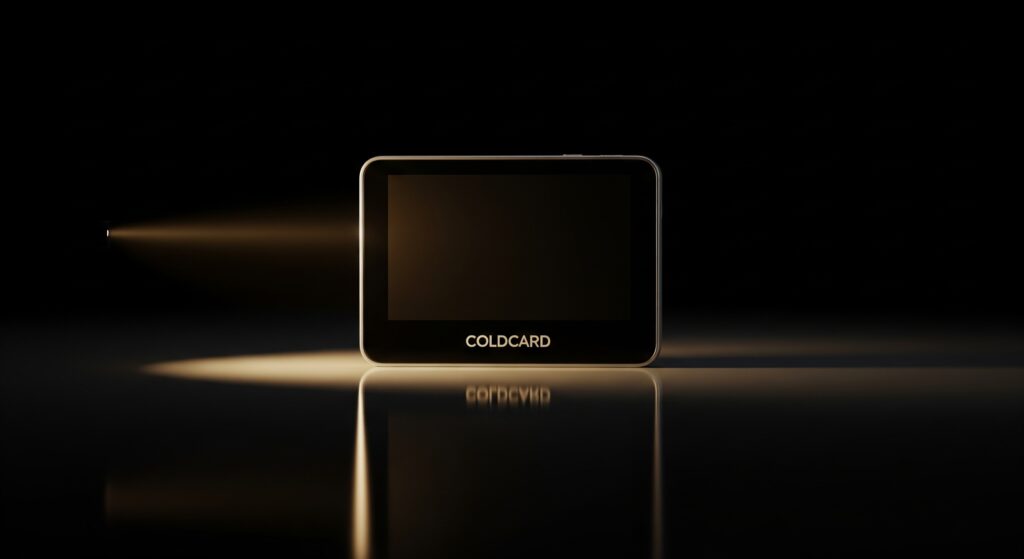
This one is not for everyone. And it’ll be the first to tell you that. Coldcard Mk4 is Bitcoin-only. No Ethereum, no altcoins. It was built for one asset and one job — protecting Bitcoin at the highest level available to regular people.
Dual secure element chips from two separate manufacturers. Full air gap via SD card — never touches a USB port if you don’t want it to. A duress PIN that silently wipes the device if you’re forced to unlock it under pressure. A decoy wallet that opens with a different PIN. Seed generation that never involves a connected device at any stage.
If you’re holding a meaningful Bitcoin position for the long term, the Bitcoin price prediction for 2026 explains exactly why this cycle matters — and why matching serious conviction with serious custody makes sense.
The learning curve is real. Setup takes time. The interface is intentionally minimal. But the security it provides is genuinely at the top of what retail users can access.
Price: ~$157 | Best for: Long-term Bitcoin holders who want the absolute ceiling on security
4. Keystone 3 Pro — Air-Gap Security Without Giving Up Everything Else
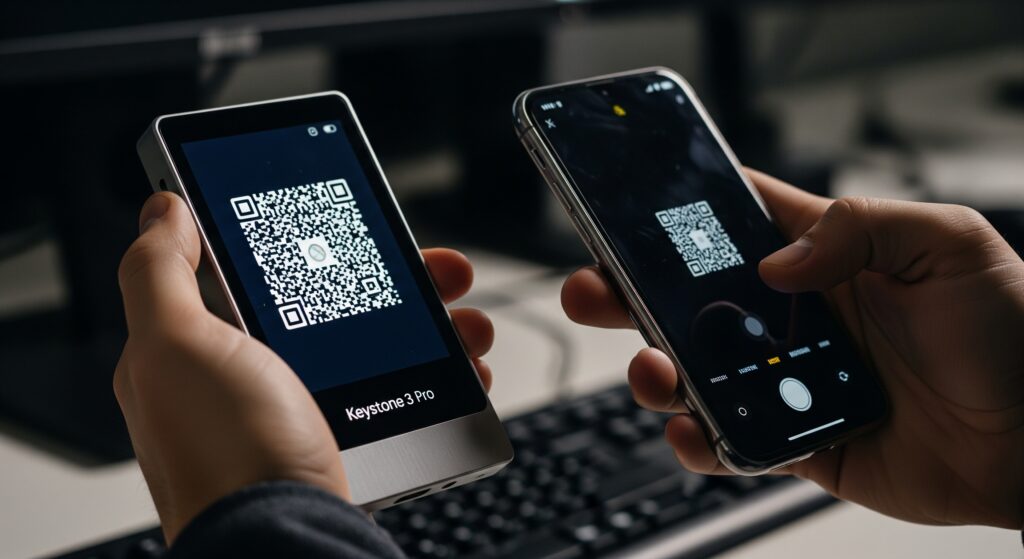
Here’s the gap Keystone fills: Coldcard’s air-gap security, but for people holding more than just Bitcoin.
Every single transaction on the Keystone 3 Pro goes through QR codes. Your computer shows a QR code. The Keystone reads it and displays the transaction details clearly on its 4-inch screen; you confirm, and it generates a signed QR code back. Your private key never crosses a cable or wireless signal. Ever.
It supports over 5,500 tokens, integrates natively with MetaMask, and has three secure element chips. If you’re active in DeFi and want your keys genuinely air-gapped while still participating, this is the setup. Understanding liquidity in cryptocurrency is important here, too, because DeFi protocol risk doesn’t disappear just because your wallet is secure. The wallet protects your key. The protocol is a separate layer.
For anyone who felt like they had to choose between air-gap security and multi-chain flexibility, Keystone 3 Pro removes that trade-off.
Price: ~$169 | Best for: Multi-coin holders who want an air-gap without sacrificing DeFi access
5. Exodus + Trezor — The Friendliest Way to Start
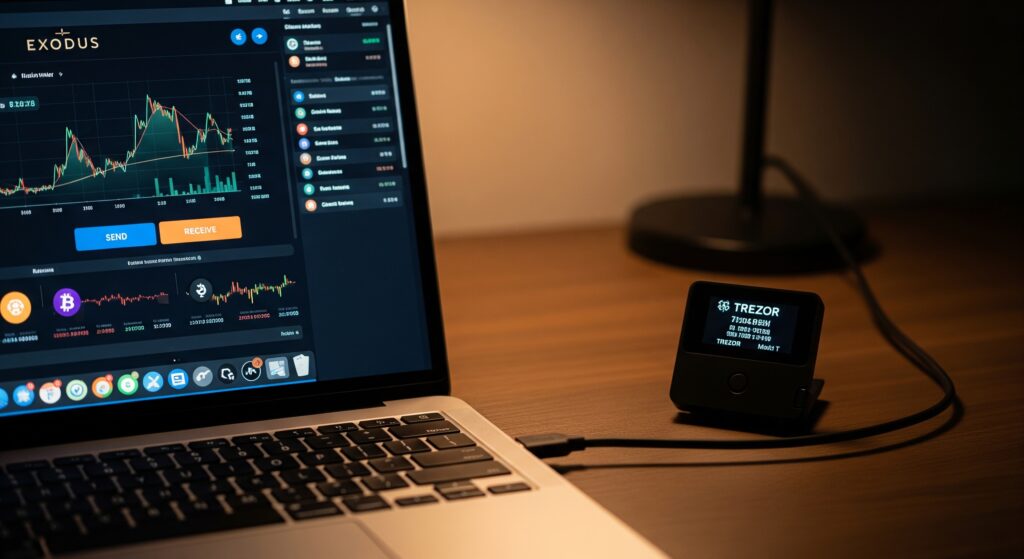
The crypto wallet Exodus alone is a hot wallet — connected to the internet, beautiful interface, easy to use, and genuinely one of the best-designed crypto apps out there. But hot wallets have the same problem as exchanges: your key is online.
Pair it with a Trezor hardware device, and that changes completely. Exodus integrates natively with Trezor. Your keys stay in the hardware. The beautiful interface stays in front of you. You get the best of both.
This is the entry point I’d recommend to anyone coming off an exchange for the first time who finds the other options in this list a bit intimidating. The Trezor Model One costs around $79. Exodus is free. The security you get out of that combination is far beyond what most people walking away from exchanges currently have.
One honest note: Exodus charges a premium on in-app swaps. If you’re trading actively and often, that adds up. For holding and occasional moves, it’s fine.
Price: Free + ~$79 Trezor Model One | Best for: Beginners moving off exchanges who want a clean, friendly interface
Side-by-Side: Which One’s for You
| Wallet | Price | Air-Gap | Coin Support | Best For |
|---|---|---|---|---|
| Ledger Nano X | ~$149 | No | 5,500+ | Most people, daily use |
| Trezor Model T | ~$219 | No | 1,800+ | Open-source transparency |
| Coldcard Mk4 | ~$157 | Yes (SD card) | Bitcoin only | Max BTC security |
| Keystone 3 Pro | ~$169 | Yes (QR) | 5,500+ | Air-gap + multi-coin |
| Exodus + Trezor | ~$79+ | No | 300+ | Beginner-friendly start |
One Thing on “Free” Hardware Wallets
You’ll see offers online — “free hardware wallet with purchase” or resellers on Amazon pricing them below retail. Skip them.
Hardware wallet supply chain attacks are documented and real. A modified device looks identical to a genuine one. It stores your crypto fine. It also stores your seed phrase for someone else. Buy direct from the manufacturer’s official website. Every single time. Not sure how to verify you’re on the right site? EFF’s Surveillance Self-Defense guide covers exactly that — it’s free and takes 10 minutes to read.”
The Bigger Picture
A hardware wallet is your most important security layer. But it sits inside a wider system.
How you enter the market matters. Dollar cost averaging keeps you from putting everything in at the wrong moment. Knowing where the market’s emotional temperature sits — using the Crypto Fear and Greed Index — keeps you from buying out of panic or hype. And whether you should invest in crypto at all right now is a question worth answering honestly before any of this matters.
The hardware wallet secures what you already have. The rest of the framework makes sure what you have is worth securing.
Quick Questions People Always Ask
Do I really need a hardware wallet, or is a software wallet fine?
A software wallet is connected to the internet. That means it’s reachable. A hardware wallet keeps your private key offline, no matter what’s happening on your device. If you’re holding anything you’d be genuinely upset to lose — yes, you need one.
What if I lose the device?
Nothing happens. Your seed phrase restores your full wallet on any new device. The seed phrase is what matters, not the hardware. Write it down. Store it somewhere physically safe. Never photograph it.
Which wallet is genuinely the safest?
Coldcard Mk4 for Bitcoin. Keystone 3 Pro for everything else. Both use air-gap architecture, which removes the entire category of attack that hardware wallets connected via USB or Bluetooth are theoretically vulnerable to.
Can a hardware wallet be hacked remotely?
No realistic remote attack exists against a properly used hardware wallet. The scenarios where hardware wallets have been compromised involve physical access to the device or user error with the seed phrase — not remote attacks. That’s exactly the security guarantee the hardware design is built around.
Is Ledger or Trezor better?
Depends on what you care about. Ledger has a bigger coin list and a cleaner app. Trezor has fully open-source firmware that you can verify yourself. Both are strong. Neither is a bad choice.
One Last Thing
Here’s the truth about hardware wallets. People put them off because they feel like an upgrade for “serious” investors. But the people who learned this lesson the hard way usually had less than they thought was worth protecting — until it was gone.
The whole point of owning crypto is that you control it. A hardware wallet is where that control actually begins.
Pick one from this list. Buy it directly. Set it up this week. That’s the entire action step.
Your crypto made it this far. Give it a home worth keeping.

Ammar Malik is an independent digital asset researcher and the founder of AmmarMagazine. He specializes in analyzing on-chain security and evaluating technical tools. Through clear, objective crypto resources, Ammar Malik delivers accessible Web3 education to help everyday users navigate the market safely.