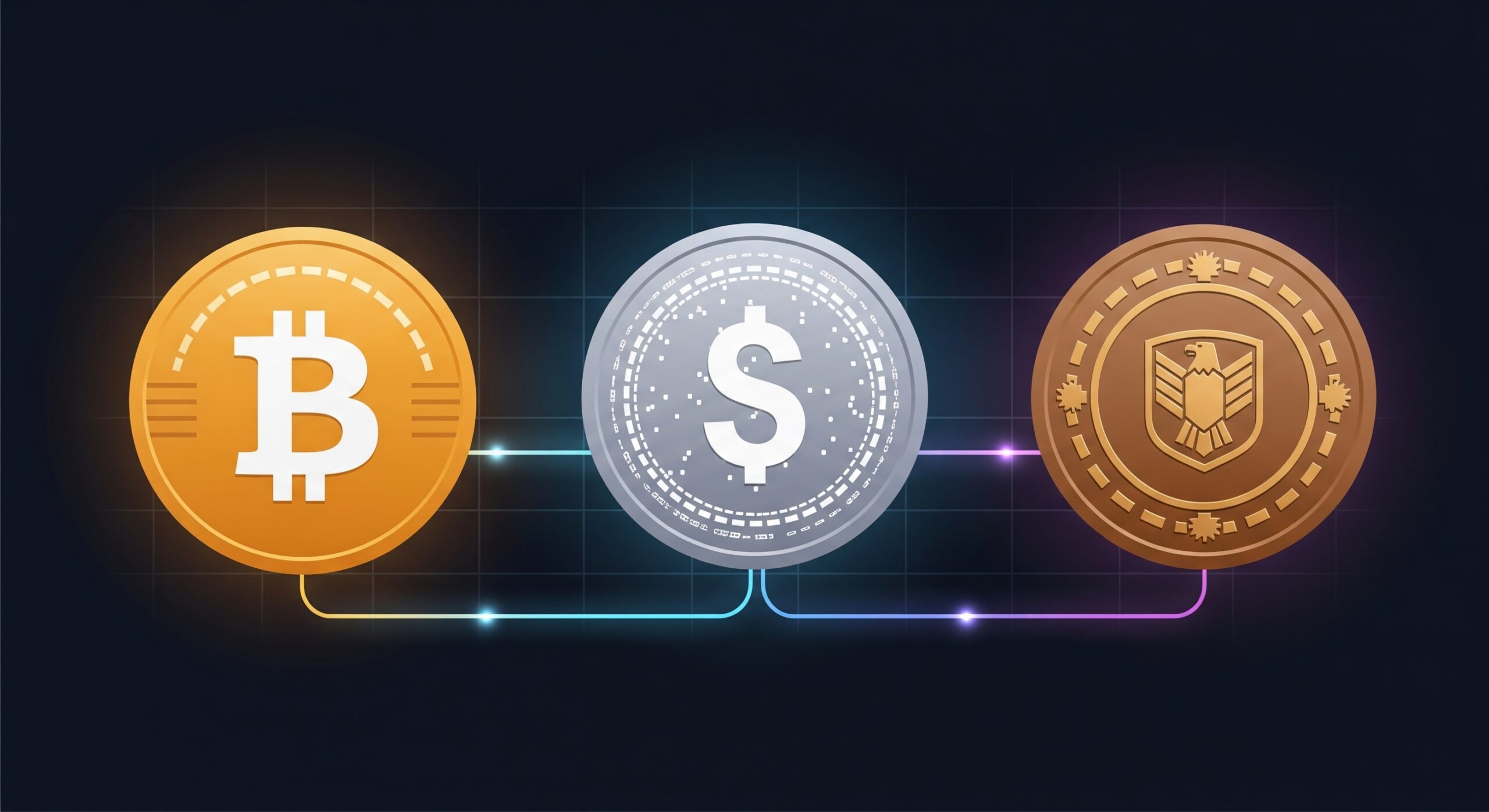
Someone asks you, “What is a digital currency?” and you nod, knowing. Then they follow up with “Okay, but what “kind?”—and suddenly you’re stalling. Don’t worry, you’re not alone. Almost nobody actually knows the difference until someone breaks it down for them plainly. So let’s do that right now.
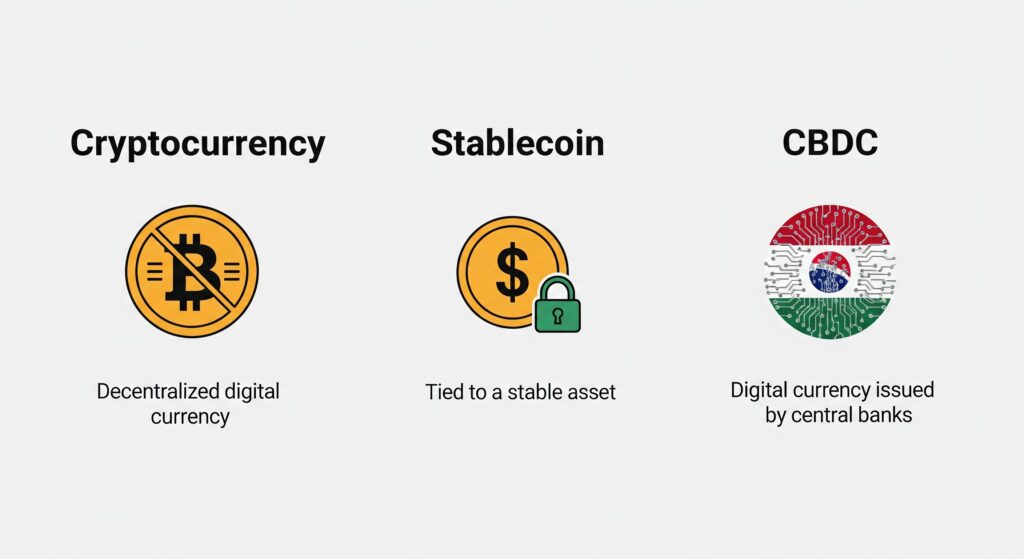
Quick answer first, since you probably want that before anything else: a digital currency is just money that lives online instead of in your pocket. No paper, no coins. And it splits into three main types — cryptocurrency (nobody owns it; it just runs), stablecoins (crypto that’s tied to something steady, usually the dollar), and CBDCs (digital money your government actually issues). Same family, but they behave nothing alike. Stick with me, and I’ll walk you through why that matters more than it sounds.
So What Even Is a Digital Currency?
Forget the jargon for a second. A digital currency is just money you can’t touch. No bills, no coins, nothing physical at all — it’s a number that lives on a screen somewhere.
⚡ Featured Web3 Resource
Verify smart contracts, track on-chain assets, and audit token security instantly using our recommended platform.
Access Verified Web3 Tool →That’s honestly the whole idea.
Where people get tangled up is that we throw three very different things under this one umbrella. Even the money sitting in your regular bank app is technically “digital” — but that’s not what anyone means when they say “digital currency” these days. We’re talking about money that was born digital, not paper money that was just digitized.
Want the nuts and bolts of how the ledger actually works behind all this? I broke it down in What is blockchain — good read if terms like “distributed ledger” make your eyes glaze over a little.
Digital Currency vs Cryptocurrency — They’re Not Twins
This is the mix-up I see more than anything else, so let’s clear it up once and for all: every cryptocurrency is a digital currency, but not every digital currency is a cryptocurrency.
Crypto is just one branch of the digital currency tree — the decentralized branch, running on a blockchain, with zero bank or government pulling the strings. Digital currency is the whole tree, and that includes CBDCs too, which sit at the opposite end of the spectrum — fully controlled by a government.
Think of it like cars. “Vehicle” is the big category. “Motorcycle” is one specific type inside it. Digital currency is the vehicle. Bitcoin is the motorcycle.
The Three Real Types You’ll Actually Run Into
1. Cryptocurrencies
This is the one everyone pictures first — Bitcoin, Ethereum, and thousands of others crowding behind them. No bank issues these. No CEO controls them. They run on a blockchain, get checked and verified by a spread-out network of computers instead of a single institution, and most have a capped or predictable supply.
And honestly, that’s the appeal. Nobody can freeze your wallet because they feel like it. Nobody can quietly print a few billion more overnight. You can send value to someone on the other side of the planet without asking a bank’s permission first. If you’re just starting to poke around this world, cryptocurrency for beginners is a solid, unrushed place to start.
But let’s be real about the flip side too — prices can swing hard in a single day, a typo in a wallet address means your money’s gone for good, and the rulebook is still being written in most countries.
2. Stablecoins
Stablecoins exist because someone, somewhere, got tired of their grocery money jumping around 8% before lunch. They’re crypto tokens pinned to something steady — usually the US dollar — so one coin should always land around $1, give or take.
They’re genuinely handy for moving money fast without the rollercoaster. Traders lean on them constantly, parking funds in a stablecoin between trades instead of cashing all the way out to a bank account every time. The catch worth knowing? You’re trusting whoever issues that stablecoin to actually be holding the reserves they claim to hold. Not every issuer has earned that trust cleanly, so it’s smart to do a little digging before parking serious money in one.
3. Central Bank Digital Currencies (CBDCs)
This is the one everyone’s suddenly curious about, and it really doesn’t play by the same rules as the other two. A CBDC is digital money your central bank issues directly — not a private company, not some decentralized network of strangers. <cite index=”4-1″>It’s simply a digital version of a country’s official currency, carrying the same legal weight as physical cash</cite>, and unlike crypto, <cite index=”4-1″>there’s nothing decentralized about it. </cite>
Here’s how the <cite index=”8-1″>Bank for International Settlements puts it: a CBDC is a digital payment tool, in the national currency, that’s a direct liability of the central bank itself</cite> — which is a slightly wonky way of saying it’s not like the balance in your banking app right now. That balance is technically owed to you by your commercial bank, not the central bank. A CBDC skips that middleman entirely.
So where does this actually stand today, in 2026? <cite index=”3-1″>Five CBDCs are live in retail or near-retail form already — Nigeria’s eNaira, the Bahamas’ Sand Dollar, and Jamaica’s JAM-DEX among them — with roughly 40 more still in pilot mode</cite>. <cite index=”3-1″>China’s e-CNY is the biggest pilot by far, now running in more than 30 cities</cite>, while <cite index=”3-1″>the European Central Bank is still deep in its prep phase for a digital euro and isn’t expecting a real launch before 2027 or 2028</cite>. So no, a “digital dollar” isn’t landing next year. This is still very much a slow-moving research project, not a finished product.

Why People Actually Move Toward Digital Currency
It’s rarely one big dramatic lightbulb moment. Usually it’s a pile of small, annoying frustrations that finally add up:
- Speed — a bank wire abroad can take days; crypto can land in minutes
- Access — all you need is a phone and internet, no bank branch, no appointment
- Control — nobody can freeze a decentralized wallet the way a bank can freeze your account
- Wanting to understand it before it’s mandatory — CBDCs are rolling out globally whether people opt in or not, so plenty of folks would rather learn the system now than get caught off guard later
None of this means jumping into digital currency is automatically right for you. It just means the reasons people gravitate toward it are usually pretty reasonable — not the reckless hype story this space often gets painted as.
The Real Upsides of Digital Currency
- Faster transfers, especially across borders, compared to a traditional bank wire
- Lower fees on plenty of networks compared to wires or remittance services
- Transparency — blockchain-based currencies leave a trail anyone can check
- A way in for people locked out of traditional banking
- Programmability — smart contracts let money move on its own based on set conditions, something a regular bank account just can’t do. Smart contracts on blockchain break down exactly how that works if you’re curious
And the Honest Downsides
- Volatility — especially with cryptocurrencies that aren’t pegged to anything
- No undo button — send crypto to the wrong address and there’s no customer service line waiting to fix it
- Rules that shift by country and change often, so what’s fine today might not be tomorrow
- You’re the security team now — lose your wallet keys, and there’s no “forgot password” link to save you
- CBDCs raise real privacy questions — since every transaction runs through a central ledger, that’s a level of visibility physical cash never had
What a Digital Currency Wallet and Address Actually Mean
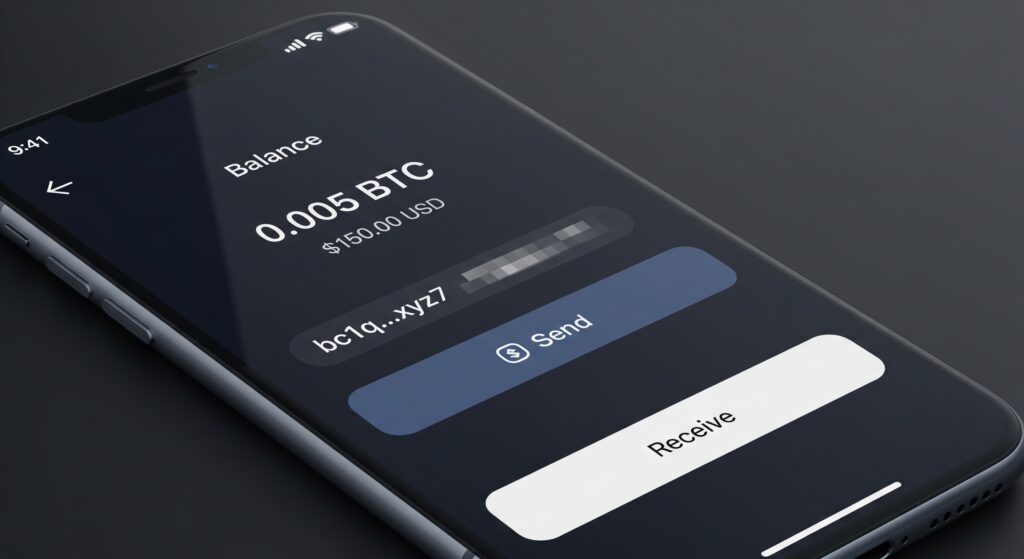
Here’s something that trips people up early on: a digital currency wallet doesn’t actually “hold” your coins the way a leather wallet holds cash. It holds the keys that prove those coins on the network belong to you. Your wallet address works kind of like an account number — totally fine to share so someone can send you money — but the private key behind it should never leave your hands.
If you’re picking your first one, I put together a full rundown in what is a crypto wallet, plus a ranked list in 2026 best crypto wallets if you’d rather see options than read theory.
Digital Currency Exchanges — Where You Actually Buy This Stuff
An exchange is just the marketplace where you swap regular money for digital currency or trade one coin for another. And no, they’re not all built the same. Some are built for beginners who just want something simple. Some chase the lowest fees. Some stack every coin under the sun.
Before you settle on one, check a few things: Is it actually regulated where you live? Does it keep user funds in cold storage? Has it stayed clean of major security breaches? If you’re still deciding whether to get in at all, should I invest in crypto? It’s worth a read before you even pick a platform.
Crypto vs Stablecoin vs CBDC — Side by Side
| Feature | Cryptocurrency | Stablecoin | CBDC |
|---|---|---|---|
| Issued by | Decentralized network | Private company | Central bank |
| Value stability | Volatile | Pegged (usually to USD) | Fixed 1:1 with national currency |
| Who’s in control | Nobody, really | The issuer | The government |
| Example | Bitcoin, Ethereum | USDT, USDC | e-CNY, eNaira, Sand Dollar |
| Privacy | Pseudonymous | Pseudonymous | Low — tied to a central ledger |
| Best for | Long-term holding, speculation | Fast transfers, dodging volatility | Everyday payments (where it’s live) |
Okay, But Is a “Digital Dollar” Actually Coming?
People ask me this constantly, so let’s just settle it: not anytime soon. <cite index=”9-1″>The Bank of England has actually been softening its stance on stablecoin restrictions after industry pushback</cite> rather than racing toward its own retail CBDC, and that’s the general mood across most advanced economies right now — lean into regulating private stablecoins instead of rushing out a government-run digital currency. If a US digital dollar ever happens, it’s a slow multi-year grind, not breaking news you’ll wake up to next year.
FAQ
What is a digital currency in economics?
It’s any medium of exchange that exists purely online and does the same three jobs any currency has to do — act as a unit of account, a store of value, and a way to pay for things — just without ever taking physical form.
What is a digital currency used for?
Payments, sending money abroad, trading, saving, and increasingly, automated transactions through smart contracts that regular money simply can’t pull off.
What is a digital currency example?
Bitcoin (cryptocurrency), USDC (stablecoin), and China’s e-CNY (CBDC) — three completely different categories, all wearing the same “digital currency” label.
What is a digital currency account?
Usually just means your exchange account or wallet — wherever your balance and transaction history actually live.
Is digital currency the same as virtual currency?
Not quite. Virtual currency, like in-game coins, usually only works inside one closed platform. Digital currency tends to work more broadly, including for real-world payments outside any single app.
Where This Leaves You
Digital currency was never one thing. It’s three completely different systems wearing the same label, and once you know which is which, you stop guessing and start actually deciding. Crypto hands you independence, with volatility riding along for the trip. Stablecoins hand you steadiness, as long as you trust the issuer behind them. CBDCs hand you government backing, with your privacy as the trade-off.
None of them wins outright. They’re just built for different jobs.
So pick the one that actually fits what you’re trying to do with your money — not whichever one happens to be loudest in the headlines this week.

Ammar Malik is an independent digital asset researcher and the founder of AmmarMagazine. He specializes in analyzing on-chain security and evaluating technical tools. Through clear, objective crypto resources, Ammar Malik delivers accessible Web3 education to help everyday users navigate the market safely.