
Let me be straight with you — the first time I filed my crypto taxes, I was completely lost.
I had trades across Binance, Coinbase, and a couple of DeFi protocols. Some were NFT flips. Some were staking rewards. Some were just swaps I forgot about. When tax season hit, I didn’t even know where to start. I tried doing it manually on a spreadsheet. Three days in, I gave up.
That’s when I discovered crypto tax software — and honestly, it changed everything.
⚡ Featured Web3 Resource
Verify smart contracts, track on-chain assets, and audit token security instantly using our recommended platform.
Access Verified Web3 Tool →If you’re holding crypto, trading it, staking it, or even just swapping tokens, the IRS (and most global tax authorities) consider every single move a taxable event. You can’t avoid it. But you can make it simple, fast, and stress-free. That’s exactly what this guide is for.
Why People Are Finally Taking Crypto Taxes Seriously
A few years ago, most crypto investors ignored taxes altogether. Either they didn’t know, or they thought it was too small to matter. That era is over.
Governments worldwide — especially the IRS — have stepped up crypto tax enforcement dramatically. Exchanges now report directly to tax authorities. If you don’t report, you’re not hiding. You’re just leaving a paper trail someone else is reading.
And it’s not just Bitcoin anymore. DeFi, NFTs, staking, airdrops, yield farming — the tax rules around these are getting more specific every year. Missing even one category can trigger an audit.
That’s why the right crypto tax tool isn’t optional anymore. It’s protection.
Why Everyone Holding Crypto Needs This
Here’s what most people don’t realize: even if you made a loss, you still need to report it. And that loss? It can actually save you money through crypto tax-loss harvesting — a strategy where your losses offset your gains and reduce your overall tax bill.
You don’t get that benefit if you’re not tracking. And you can’t track it properly without a good automated crypto tax calculator.
Whether you’re a casual holder or a full-time DeFi farmer, the rules apply to you equally. The only difference is how ready you are.
My Personal Experience — And What Almost Wrecked Me
I’ll be honest. In 2022, I ignored about 40+ DeFi transactions, thinking they were too small to matter. When I finally ran them through a crypto accounting software, I found I owed more than I expected — but I also discovered I had unreported losses that more than covered what I owed. The software literally saved me money I didn’t know I had.
That’s the thing about the best crypto tax software for DeFi — it doesn’t just calculate what you owe. It finds what you’re owed back.

What Makes a Crypto Tax Software Worth Using?
Before we get into the list, here’s what I personally look for — and what you should too:
- Exchange integrations — Does it connect to your exchange automatically?
- DeFi & NFT support — Because your Uniswap swaps count too
- IRS-ready forms — Form 8949, Schedule D, and country-specific reports
- Accuracy on capital gains — Short-term vs. long-term matters a lot
- Price — Some of the best tools offer free crypto tax software tiers
- Ease of use — The easiest crypto tax software doesn’t require a finance degree
Now, let’s get into the actual programs.
6 Best Crypto Tax Software Programs For 2026
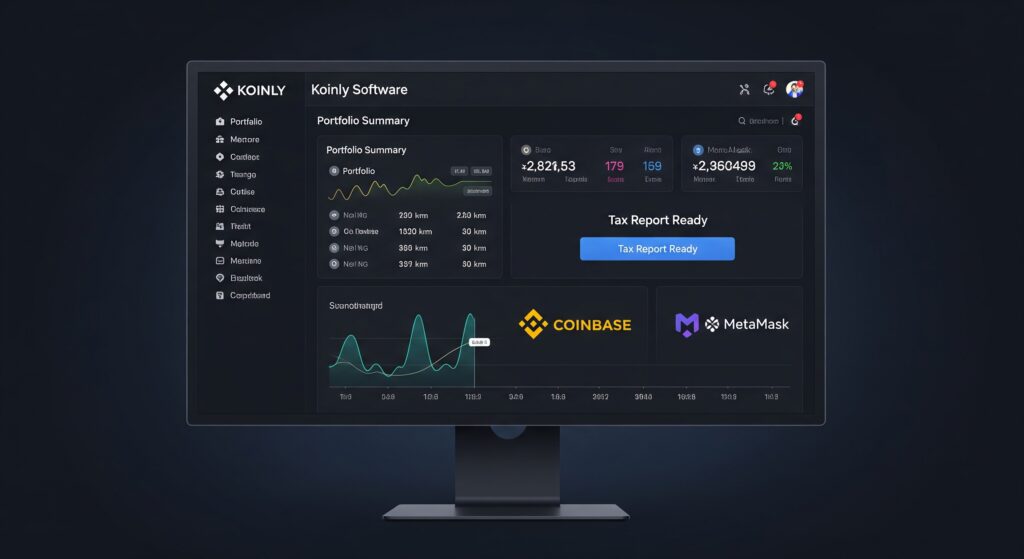
1. Koinly — Best Overall Crypto Tax Software
If I had to recommend just one tool to a friend, it’s Koinly. Period.
Koinly supports over 700 exchanges and 170+ blockchains and has some of the cleanest DeFi tracking I’ve seen. It automatically imports your transaction history, categorizes trades, and generates tax reports in formats compatible with TurboTax, TaxAct, and your local authority.
The Koinly vs. CoinTracker debate comes up a lot, and honestly, Koinly wins on DeFi depth. If you’re farming, staking, or bridging tokens, Koinly handles the complexity without breaking a sweat.
Free plan: Up to 10,000 transactions (report not included). Paid plans start at ~$49/year.
Best for: Most crypto investors, DeFi users, multi-chain portfolios
2. CoinTracker — Best for Beginners
CoinTracker is the easiest crypto tax software I’ve used for someone just getting started. The UI is clean, the sync is fast, and the explanations are actually human-readable.
It integrates seamlessly with TurboTax, which makes it arguably the best crypto tax software for TurboTax users. You do your crypto side in CoinTracker, export it, and TurboTax picks it up without drama.
Where it falls a little short is in advanced DeFi. If you’re doing complex yield farming or multi-hop swaps, you might hit some categorization limits.
Free plan: Up to 25 transactions. Paid plans start at ~$59/year.
Best for: Beginners, casual traders, TurboTax users
3. TaxBit — Best for U.S. Compliance & IRS Reporting
TaxBit was built with U.S. IRS crypto tax reporting in mind. It’s used by some of the largest exchanges in the world, which tells you something about its reliability.
What makes TaxBit stand out is its crypto tax compliance depth. It handles everything from spot trades to staking rewards and even has tools for enterprise users. If you’re worried about an audit or just want airtight records, TaxBit’s documentation is thorough.
It recently updated its consumer pricing — check their site for the latest, as it fluctuates.
Best for: U.S. investors focused on IRS compliance, audit protection
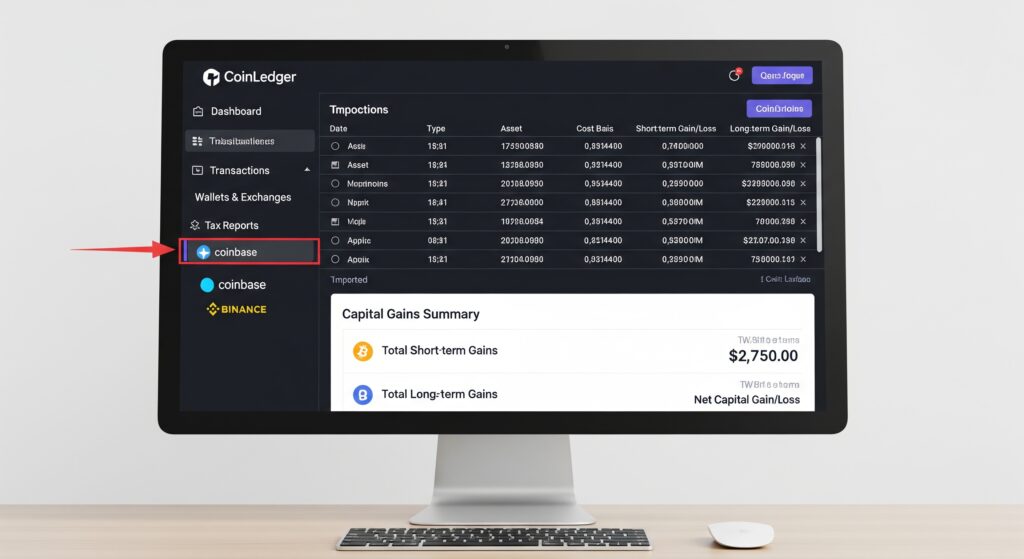
4. CoinLedger — Best for Simple Filing
Renamed from CryptoTrader. Tax, CoinLedger is clean, fast, and focused on one thing: getting your crypto tax filing for 2026 done without overcomplicating it.
You import your transactions, it calculates your capital gains on cryptocurrency, and you get a downloadable report. That’s it. No feature bloat.
It supports all major exchanges and has great crypto tax documentation for beginners. If you just need to file and move on, CoinLedger delivers.
Free preview: Yes (pay to download report). Paid plans start at ~$49/year.
Best for: Simple portfolios, first-time filers, spot traders
5. ZenLedger — Best Crypto Tax Software for DeFi & NFTs
ZenLedger is hands down one of the best crypto tax software for DeFi options right now. It tracks DeFi protocols, NFT sales, staking, lending, and even airdrops — all in one place.
What I especially appreciate is their tax loss harvesting feature. It actively shows you positions where selling could offset gains — a move that’s completely legal and can save you hundreds or thousands, depending on your portfolio size.
They also offer professional tax preparation as an add-on, where a real CPA reviews your return. That’s a layer of comfort you won’t find everywhere.
Free plan: Limited. Paid plans start at ~$49/year.
Best for: DeFi investors, NFT traders, crypto tax loss harvesting
6. TokenTax — Best Full-Service Crypto Accounting Software
TokenTax is more than software — it’s a crypto accounting software service. If you want a team of professionals to handle your entire crypto tax situation, this is it.
They support every exchange and chain I’ve tested, including obscure DeFi protocols most tools can’t parse. Their full-service plan pairs software with CPA-reviewed filings, which means you’re not just clicking buttons — an actual professional is checking your work.
It’s the most expensive on this list, but for high-volume traders or anyone sitting on a complex portfolio, it’s worth every cent.
Plans start at ~$65/year (full-service available)
Best for: High-volume traders, complex DeFi portfolios, those wanting full CPA support
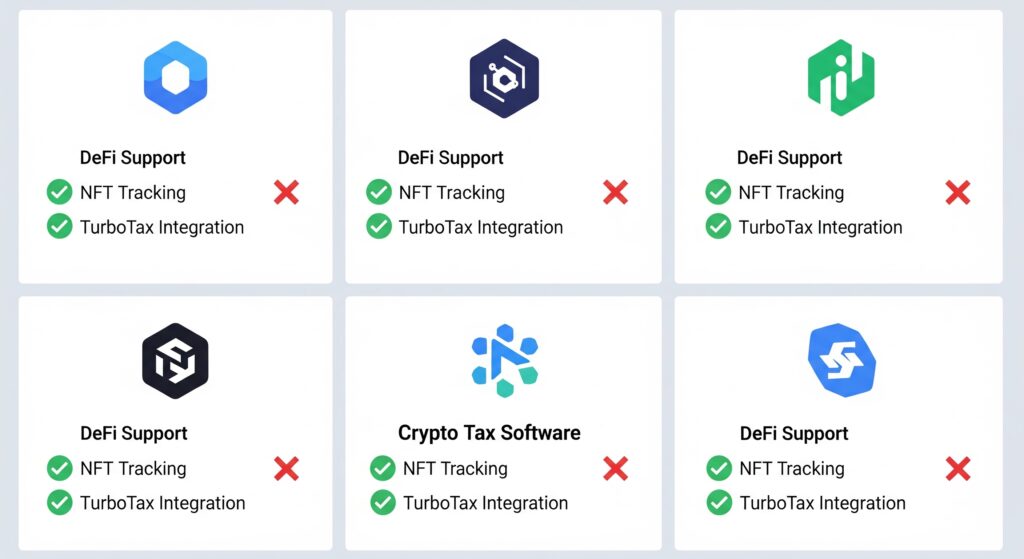
Quick Comparison Table
| Software | Best For | DeFi Support | Free Tier | TurboTax Compatible |
|---|---|---|---|---|
| Koinly | Most users | ✅ Excellent | ✅ Yes | ✅ Yes |
| CoinTracker | Beginners | ⚠️ Limited | ✅ Yes | ✅ Yes |
| TaxBit | IRS compliance | ✅ Good | ✅ Yes | ✅ Yes |
| CoinLedger | Simple filing | ✅ Good | ✅ Preview | ✅ Yes |
| ZenLedger | DeFi & NFTs | ✅ Excellent | ⚠️ Limited | ✅ Yes |
| TokenTax | Full-service | ✅ Excellent | ❌ No | ✅ Yes |
How to Calculate Crypto Taxes (The Simple Version)
Here’s what every tool above is doing under the hood — and understanding it makes you smarter about your taxes:
Short-term capital gains = Assets held under 1 year → taxed as ordinary income Long-term capital gains = Assets held over 1 year → taxed at lower rates (0%, 15%, or 20% in the U.S.)
Every swap, sale, or trade triggers one of these. Even swapping ETH for USDC is a taxable event. That’s why the word “how to calculate” crypto taxes manually is nearly impossible at scale — and why these tools exist.
For more on how gains work across market cycles, you might want to read about bear and bull markets and how timing your trades affects your tax bracket.
Mistakes I Made (So You Don’t Have To)
- Not tracking DeFi swaps — I thought they were “internal.” They’re not.
- Missing staking rewards — These are taxable as income at fair market value when received.
- Forgetting NFT sales — Even a $30 flip is a reportable event.
- Not using loss harvesting — I left real money on the table in bear years.
If you’re already investing, you should also understand how market cap works — it directly affects how your gains are classified and how volatile your holdings are.
Is There Truly Free Crypto Tax Software?
Yes — with limits. Koinly and CoinTracker both offer free plans that let you track transactions and see your tax summary. You pay only when you want the downloadable report to file.
If you have fewer than 25 transactions a year, CoinTracker’s free tier might be all you need. For anything more complex — especially DeFi or NFTs — the paid tier is worth it. The cost of a plan is a fraction of what you’d pay if you filed incorrectly.
FAQ
Q: Do I have to report crypto if I didn’t sell?
If you just held it and did nothing, generally no. But staking rewards, airdrops, and DeFi interest are considered income even without selling.
Q: Which crypto tax software is best for DeFi?
Koinly and ZenLedger are the top two for DeFi. Both handle multi-chain, liquidity pools, and yield farming better than most.
Q: Is crypto tax software worth it?
Suppose, you have more than a handful of trades — absolutely. The time saved alone is worth it, not counting the money saved from proper loss harvesting.
Q: Can these tools help me avoid crypto taxes legally?
They don’t help you avoid taxes — but they help you minimize them legally through loss harvesting and proper classification. There’s a big difference.
Q: Which is better — Koinly or CoinTracker?
For DeFi and multi-chain: Koinly. For simplicity and TurboTax integration: CoinTracker. Both are solid.
Q: Is there a risk of a crypto tax audit?
Yes, and it’s growing. Using proper crypto tax reporting software dramatically reduces that risk by keeping documented, accurate records.
External Resources Worth Checking
- 🔗 IRS Virtual Currency Guidance — The official IRS page on crypto tax rules (updated regularly)
- 🔗 Koinly’s Crypto Tax Guide 2026 — One of the most comprehensive free guides available by country
One Last Thing
Here’s what I want you to take away from all of this:
Crypto gave a lot of us financial freedom we never expected. Don’t let a tax mistake take it away.
The best crypto tax software doesn’t just save you time — it protects what you’ve built. It keeps you legal, helps you find savings you didn’t know existed, and lets you go into every tax season with confidence instead of panic.
You’ve already done the hard part — building your portfolio. Now do the smart part — protect it.
If you’re still figuring out whether crypto is the right move for you altogether, this article on “Should I invest in crypto?” might be worth a read before your next decision.

Ammar Malik is an independent digital asset researcher and the founder of AmmarMagazine. He specializes in analyzing on-chain security and evaluating technical tools. Through clear, objective crypto resources, Ammar Malik delivers accessible Web3 education to help everyday users navigate the market safely.