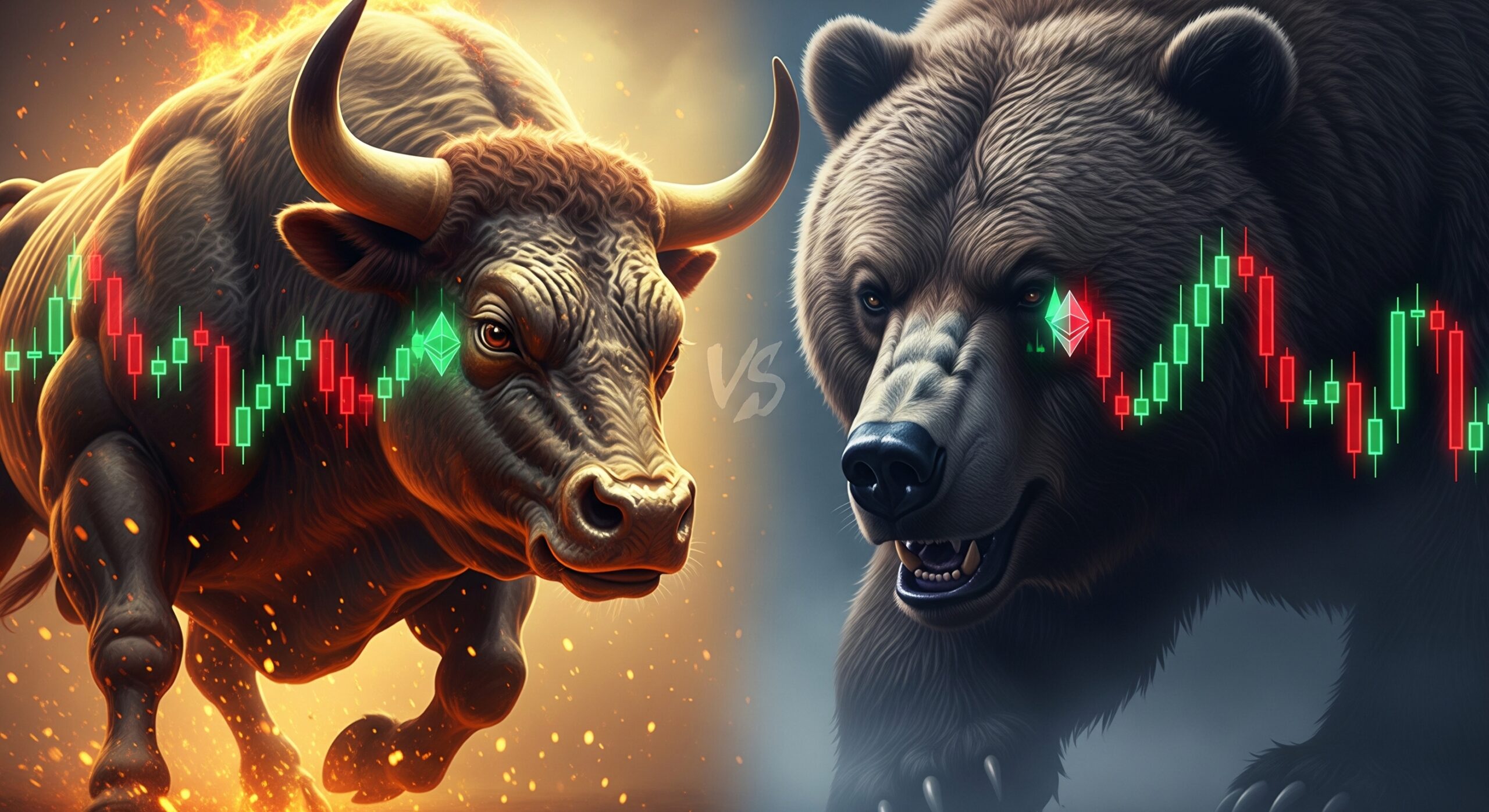
Most people who lost money in crypto didn’t lose it because the market crashed. They lost it because someone engineered the exact moment that made them click “buy” or “sell” at the worst possible time. That someone? The top 1%—the whales, the institutions, the market makers who’ve been doing this long before you and I ever heard the word “Bitcoin.”
I’m not saying this to scare you. I’m saying this because I’ve been in those rooms, studied those moves, and yes — I’ve been on the losing side of a bull trap myself. Twice. And both times I thought I was the smart one in the room.
Why Do People Even Come to Crypto in the First Place?
Let me be honest. Nobody wakes up one day and says, “I want to lose money in a volatile market.” People come to crypto because the traditional financial system failed them quietly. Your 9-to-5 isn’t beating inflation. Your savings account pays you 0.5% while the bank loans your money out at 12%. And your stock portfolio? It moves with the economy—which, if you’ve been paying attention, isn’t exactly inspiring confidence.
⚡ Featured Web3 Resource
Verify smart contracts, track on-chain assets, and audit token security instantly using our recommended platform.
Access Verified Web3 Tool →Crypto felt like the door that was always locked suddenly cracked open. It offered:
- No middleman between you and your money
- 24/7 markets that don’t close on weekends
- Life-changing returns in months, not decades
- Access to people who had nothing but a phone and still built wealth
That’s not hype. That’s documented history. But here’s what nobody told you: the same system that gives you those returns also has players who are specifically waiting for you to enter—so they can exit.
Why You Should Still Be in This Market (Despite Everything)
Here’s my professional take after years of watching markets cycle: the answer isn’t to leave. It’s to learn the language.
Every asset class has sharks. Real estate has developers who flip zoning laws. Stock markets have institutional front-running. Crypto just happens to be the most transparent—everything is on-chain if you know how to read it. The bear and bull market cycle isn’t your enemy. Ignorance of how it works is.
The people who consistently make money in crypto aren’t the ones who picked the right coin. They’re the ones who understood where they were in the cycle and acted accordingly. That’s it. No magic. No insider info. Just cycle awareness.
And before we go deep—if you haven’t read my breakdown on how market cap rules crypto decisions, that’s foundational to everything you’re about to read.
My Personal Case Study: The Bull Trap That Cost Me Real Money

It was during the 2021 bull run. Bitcoin had just hit a new all-time high, altcoins were exploding, and every chart looked like it was going vertical. I saw a token that had broken above its resistance—a clean breakout, high volume; everything looked textbook bullish. I allocated a significant position.
What I didn’t notice: the volume spike was a single wallet. The “breakout” lasted 4 hours. By the time I checked the next morning, the token had dropped 38%. Classic bull trap. The 1% had distributed their bags into my buy order.
I didn’t lose everything. But I lost enough to sit down for three days and study exactly how these traps are built. What I’m about to share with you is the result of that painful education.
So What Actually Is a Bull and Bear Market?
Let’s cut through the textbook language. You’ve probably seen the formal definitions of “bull market” and “bear market” thrown around—”A bull market is a 20% rise; a bear market is a 20% decline.” “That’s the Wall Street wrapper.” In crypto, it hits differently and faster.
Bull Market = A period where prices are rising, confidence is high, new money is entering, and the crypto fear and greed index is firmly in “Greed” or “Extreme Greed” territory. People feel unstoppable.
“You can track live market sentiment and dominance data on CoinMarketCap — it’s one of the most referenced data sources in crypto.”
Bear Market = Prices are falling or stagnant for an extended period. Confidence is low. People are panic-selling. The same index reads “Fear” or “Extreme Fear.”
Why Is It Called a Bull and Bear Market?
This is one of those questions people Google but never really get a satisfying answer to. The most accepted explanation: a bull thrusts its horns upward—representing rising prices. A bear swipes its paws downward—representing falling prices. Some trace it back to 18th-century London bearskin traders who sold skins before they had them, betting prices would drop. Either way, the metaphor stuck because it’s visually accurate to how each market feels.
The Difference Between Bull and Bear Market (And Why It’s Deeper Than You Think)
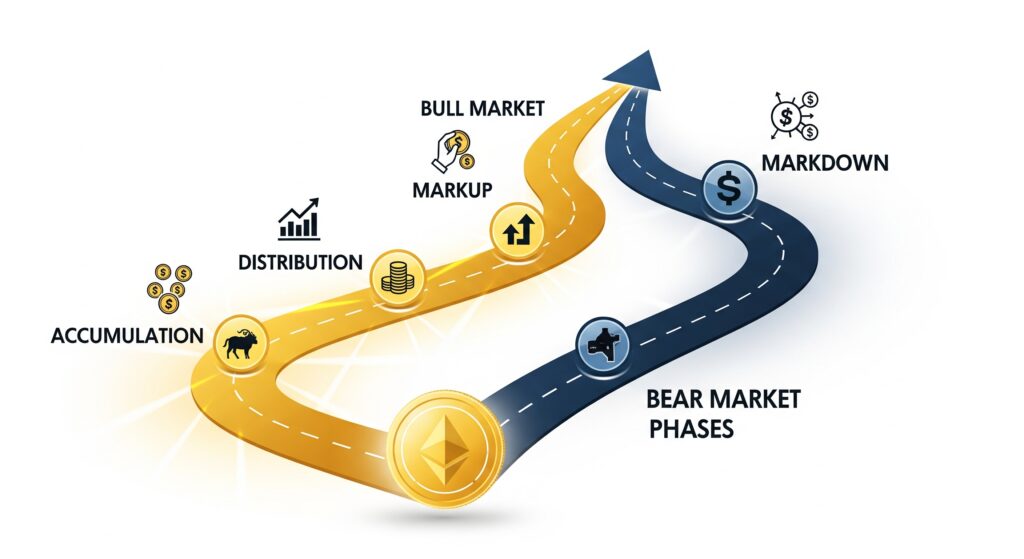
The bear and bull market difference isn’t just direction. It’s psychology. And that psychology is what the 1% weaponize.
| Bull Market | Bear Market | |
|---|---|---|
| Price Trend | Rising | Falling |
| Sentiment | Greedy, optimistic | Fearful, uncertain |
| Retail Behavior | FOMO buying | Panic selling |
| Whale Behavior | Distributing (selling) | Accumulating (buying) |
| Media Coverage | Hype and celebration | Doom and warnings |
Notice the last two rows. When you’re celebrating, they’re selling to you. When you’re panicking, they’re buying from you. That’s not a conspiracy theory. That’s on-chain data, every single cycle.
The Traps — And How the 1% Build Them
This is the section that nobody writes about clearly. Let me break down the exact playbook.
The Bull Trap
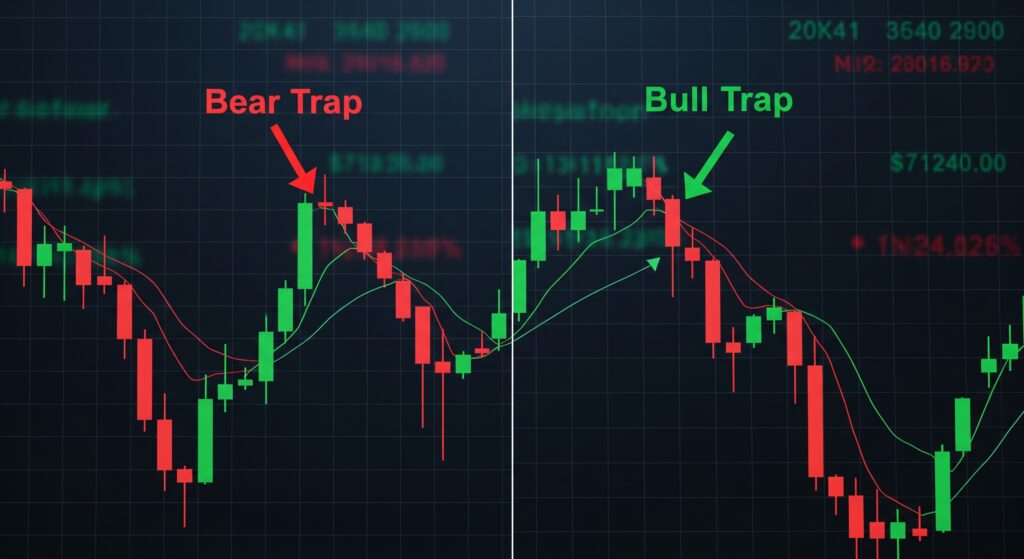
A bull trap is when price breaks above a resistance level—making it look like a new uptrend has started—and then immediately reverses downward. You see green, you enter, and they exit into your buy order.
How to spot it:
- The breakout happens on thin volume or a single candle spike
- Price closes back below the resistance level within 1–3 candles
- The crypto fear and greed index is already in extreme greed (link this keyword to the Fear & Greed article)
- Social media is screaming, “WE’RE BACK.”
That last one is the tell. When your Twitter feed is 100% euphoric, the move is almost always already over.
The Bear Trap
The opposite but equally brutal. Price drops sharply below a key support level—looks like the bottom is falling out—triggers your stop losses or panic sell—and then violently bounces back up. You sold the bottom into a whale’s buy order.
How to spot it:
- The drop is sharp, sudden, and happens outside of regular trading hours
- Volume is briefly high, then drops immediately after the move
- Price reclaims the support level within hours
- News headlines are catastrophizing a move that’s already reversing
The “Dead Cat Bounce” — The Bear Market’s Cruelest Trick

This one lives inside bear markets and destroys people who think they’re catching the recovery. A dead cat bounce—a term that even Investopedia defines as a temporary price recovery during a downtrend—is sharp enough to feel real but not backed by any structural change.
Here’s what makes it dangerous: it looks exactly like what people have been waiting for. After weeks of red, a 25–30% bounce feels like salvation. People buy in. Then the downtrend resumes and hits a new low.
The name is brutal for a reason. Even a dead cat bounces if it falls from high enough. The bounce means nothing if the underlying fundamentals haven’t changed.
The Killer Strategy: How to Stop Playing the Victim
Now that you understand the trap design, here’s what actually works. This isn’t theory—this is the adjusted approach I use personally.
1. Never Trade the Breakout—Confirm It First
Wait for the breakout candle to close. Then wait for a retest of the broken level. If the price returns to the level and holds—that’s confirmation. If it slips back below, it was a trap. Yes, you’ll miss the first 10–15% of the move sometimes. But you’ll avoid the 40% trap loss every time.
2. Watch the Volume Like It’s Your Money (Because It Is)
Real moves have real volume. A breakout on thin volume is a costume, not a trend. Volume is the one thing that’s nearly impossible for whales to fake across large timeframes—it costs them too much to sustain.
3. Read Market Sentiment Before You Read Price
I check the crypto fear and greed index before I even look at a chart. If it’s above 80 (Extreme Greed), I’m not buying. If it’s below 20 (Extreme Fear), I’m watching closely for entries. The crowd is almost always wrong at the extremes.
4. Understand Where You Are in the Cycle
This is the one. Most traders lose because they’re using bull market tactics in a bear market or vice versa. In a bull market: hold longer, don’t sell early, take partial profits at resistance. In a bear market: reduce exposure, take profits faster, and don’t average down into falling knives.
Want to know where Bitcoin could be heading next? I broke down the key price levels and expert insights in my Bitcoin Price Prediction 2026 piece—that context matters here.
5. Know Your Bull Market and Bear Market Indicators
Here are the signals I personally track:
- On-chain metrics: Exchange inflows (sell pressure) vs. outflows (accumulation)
- Funding rates: When perpetual futures funding goes extremely positive, a correction is near
- Dominance shifts: Bitcoin dominance rising = risk-off, bear-leaning. Altcoin dominance rising = bull energy building
- Stablecoin supply: Growing stablecoin market cap = dry powder waiting to enter = bullish signal

The Psychology They’re Actually Exploiting
Here’s the thing they don’t teach in any course. The bullish and bearish meanings in the stock market or crypto aren’t just about price. It’s about your emotional state at any given price. And the 1% know your emotional state better than you do because they engineered the price that caused it.
When you’re in a bull market, you feel invincible. That’s when you over-leverage. When you’re in a bear market, you feel hopeless. That’s when you sell at the bottom.
Both of those feelings? Manufactured. The price didn’t “make” you feel that way. The price move was designed to trigger that feeling so that a specific group could take the other side of your trade.
The exit from this loop isn’t emotionlessness. It’s a preset plan with clear rules that you wrote when you were calm—and you follow it when you’re not.
Bear & Bull Market: Quick Reference You’ll Actually Use
Signs you might be in a bull trap:
- Price spiked above resistance on one candle
- Volume didn’t follow through
- Everyone online is suddenly a genius
- The move happened fast and feels “too easy.”
Signs you might be in a bear trap:
- Sudden panic drop on no new fundamental news
- Drop happened in low-liquidity hours (weekends, late night)
- Price immediately reclaimed the level it broke
- The “bad news” was already known weeks ago
Signs of a real bull market starting:
- Rising volume over weeks, not hours
- Institutional on-chain accumulation
- Bitcoin dominance stabilizing or rising first
- Fear and greed transitioning from Fear → Neutral → Greed gradually
Signs of a real bear market:
- Multiple lower highs over weeks
- Declining network activity
- Stablecoin outflows without a corresponding price rise
- Narratives shifting from “opportunity” to “survival.”
The One Thing Most People Get Wrong About Bear & Bull Markets

Alt Text: Split image showing a trader buying at the bull market peak and panic selling at the bear market bottom with X marks, and a calm investor reviewing charts with a checkmark
Most people treat bear and bull markets like weather—something that happens to them. The professional mindset flips that. Both cycles are profitable environments if you understand which tools apply where.
Bear markets are where long-term wealth is actually built. The assets that make headlines during bull runs were quietly accumulated during bear cycles by the same people who look like geniuses when prices rise. They weren’t lucky. They were early—and they were patient.
Bull markets are where that patience gets rewarded—but also where the most money gets lost by people entering too late, too leveraged, and too emotionally.
The difference between bear and bull market outcomes in your portfolio comes down to one thing: whether you were a buyer or seller at the extremes. And that is 100% a decision you control.
Final Thought
The 1% don’t have better information than you. They have better emotional infrastructure than you. They’ve built systems, rules, and frameworks so that when the market is designed to make you panic or feel euphoric, those feelings don’t translate into trades.
You can build that same infrastructure. It starts by understanding what you just read—and continuing to study until these traps feel obvious rather than invisible.
The market will keep cycling. Bulls will run. Bears will take over. Traps will be set. The only question is, next time one is triggered, are you the one walking into it, or the one watching it from the outside with a better trade already planned?
That’s the edge. And now you have it.

Ammar Malik is an independent digital asset researcher and the founder of AmmarMagazine. He specializes in analyzing on-chain security and evaluating technical tools. Through clear, objective crypto resources, Ammar Malik delivers accessible Web3 education to help everyday users navigate the market safely.